Lunch is supposed to be the easy part of the workday. Often in reality, someone's running out the door trying to get a bite between meetings. Someone else is scrolling through a delivery app while half-listening to a call. A few others don't bother at all, powering through until dinner to save money.
What gets lost in that daily scramble is worth paying attention to. We all know that food (or a lack of it) changes how people function. It has the power to influence moods and determines how sharp someone actually feels when they need energy most.
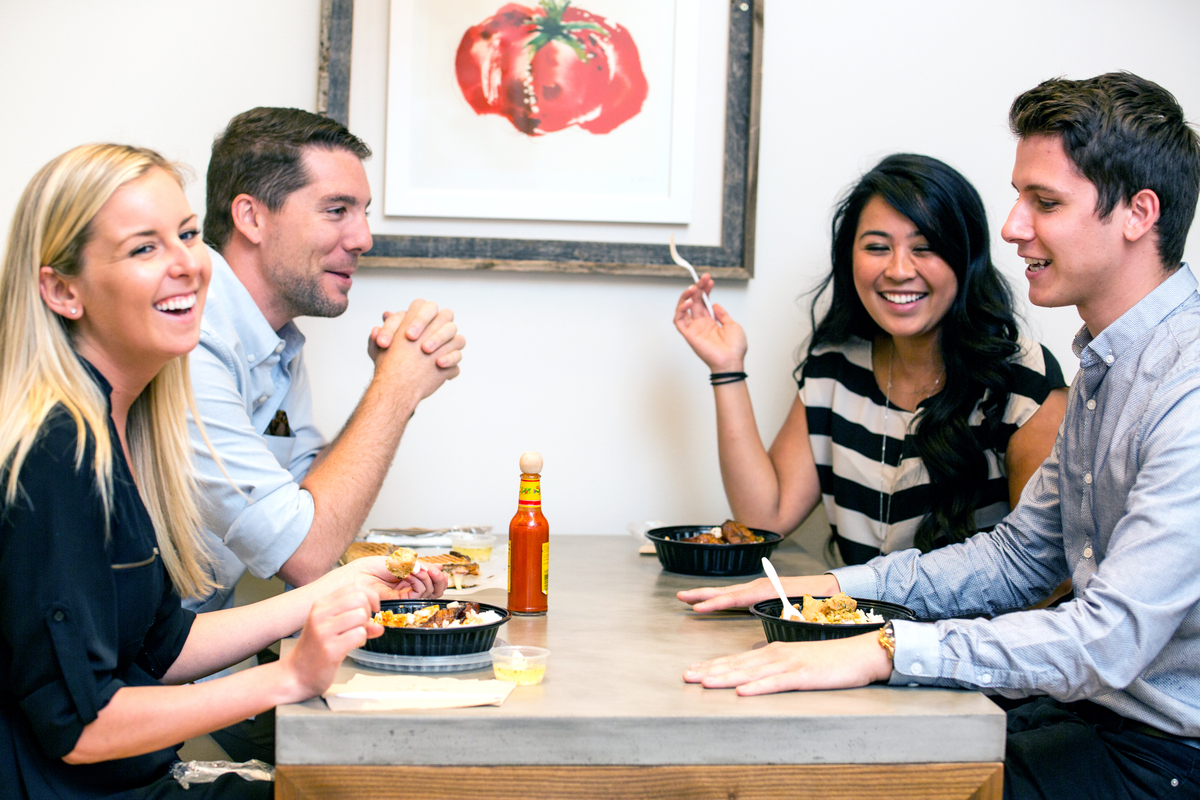
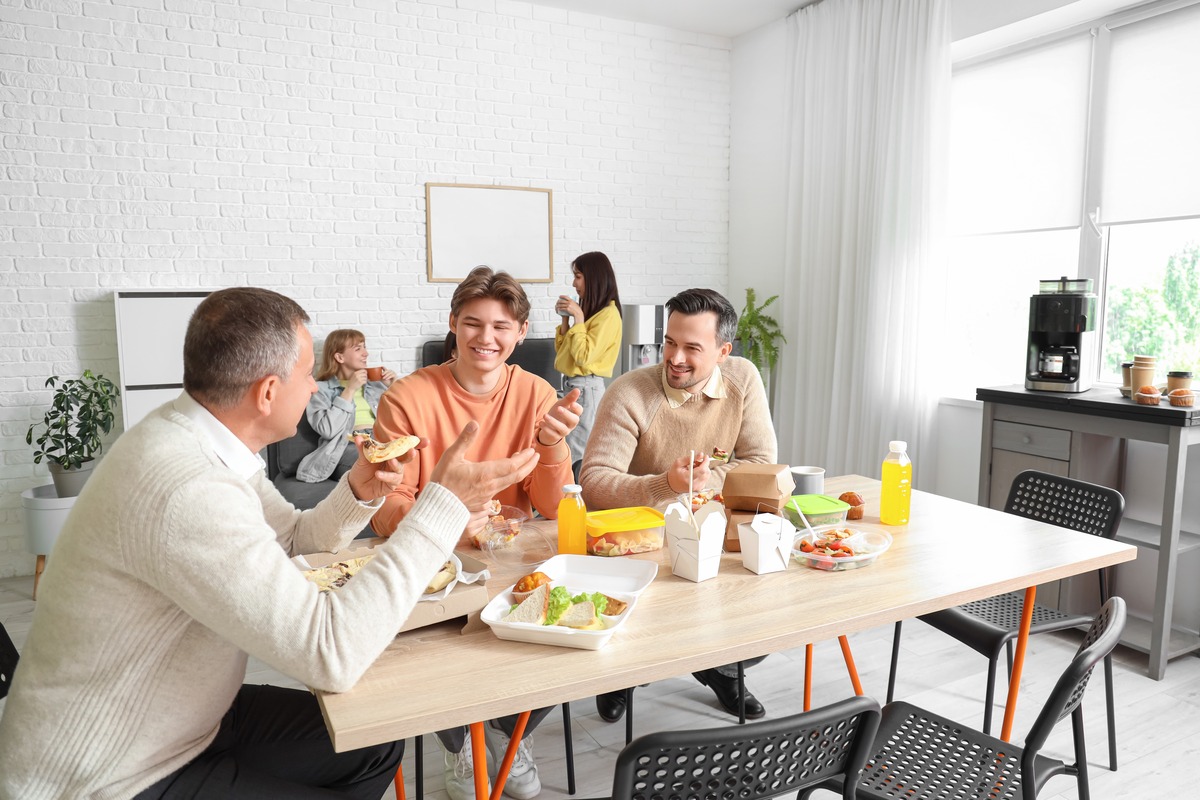
When authentic meals are available for employees onsite, people can slow down in the middle of the day, sit together, have natural conversations, and cross paths with colleagues they wouldn't otherwise see. That kind of connection doesn't happen when everyone scatters for an hour in the middle of the day.
That connection is crucial for organizational alignment and success. That’s why this guide breaks down what a modern work lunch delivery service actually looks like, why it matters more than most companies realize, and what to look for when evaluating options for your team.
A work lunch delivery service is a repeatable food program built around how people actually work. It’s not a once-a-quarter catering order. It’s not a pile of meal stipend receipts waiting to be approved.
It’s a system: restaurants rotate daily, employees order individually, and all of the meals are delivered at once. When it’s set up correctly - a work lunch delivery service flexes when attendance shifts and removes the daily friction that usually surrounds midday meals.
Modern corporate lunch delivery programs tackle real problems in creative ways. For instance:
When done properly, a work lunch program becomes predictable and reliable. Employees know what’s coming each week. Office managers aren’t chasing RSVPs. HR isn’t guessing how much food to order. Even hybrid attendance swings don’t derail the plan.
A well-designed lunch delivery service for employees also reflects something larger: how much a company respects their employees' time inside and outside of work. Lunch is when people step away, reset, and talk across teams. When access is inconsistent, that reset disappears. When it’s structured, participation rises and administrative strain drops.
Delivery apps create transactions. Catering creates events. A structured work lunch delivery service supports a consistent work lunch program without requiring someone to handle logistics.
| Delivery Apps | Traditional Catering | Structured Work Lunch Delivery Service (Fooda) | |
|---|---|---|---|
| What it’s built for | Individual convenience | Planned meetings | Recurring workplace lunches |
| Ordering style | Everyone orders separately | One group order | Individual ordering inside one system |
| Headcount accuracy | No visibility | Estimated in advance | Based on actual participation |
| Dietary coverage | Hit or miss | Requires manual planning | Integrated into the platform |
| Waste risk | Medium - higher environmental impacts | High food waste | Little to no waste due to participation tracking |
| Admin lift | Expense reports & coordination | RSVPs, minimums, follow-ups | Centralized ordering & reporting |
| Works with hybrid schedules? | Challenging | Hard to adjust weekly | Designed to flex with attendance |

In many offices, focus naturally starts to fall off by the middle of the day.
Long meetings use a lot of mental power, energy dips, and people start missing the small but important details. What a lot of leaders don’t always realize is that a good lunch program can be the key to getting people back on track and minimizing mistakes.
An honest break with real food makes a true difference by clearing mental space and lowering burnout risk. When people don’t have to spend most of their break sourcing food or time outside of work figuring out lunch, that cognitive load is lifted. Small decisions add up over a week and when you look at the impact on employee efficiency and output, they compound.
Right now, sustained focus is harder to maintain than most leaders admit and it’s crucial to recognize that protecting lunch is the same as protecting a motivated workforce.
Most lunch breaks are slotted to be 30 minutes to one hour but data shows the average lunch break only lasts 22 minutes. When breaks shrink, so does recovery time. Cortisol stays elevated and small problems feel harder to handle.
There’s decades of research tying chronic job strain to heart disease and metabolic issues. Add irregular meals to that and the risk climbs. In more physical roles, it’s higher. Now imagine layering skipped lunches onto that.
A consistent work lunch program protects that break instead of letting it disappear.
Office attendance isn’t steady anymore. Kastle’s Back to Work Barometer shows most major cities averaging around half capacity, with sharp midweek peaks. Tuesday might be packed. Friday might feel empty.
Traditional corporate lunch systems and cafeterias were built for predictable headcounts. Hybrid offices aren’t predictable. Over-ordering wastes the budget. Under-ordering creates frustration. Both erode trust in the program.
A structured work lunch delivery service flexes with participation instead of fighting it. If hybrid attendance shifts week to week, the program shifts too. That kind of adaptability matters when office turnout can swing by 30% in a few days.

Shared meals are one of the fastest ways to build team culture and improve engagement between departments. When employees eat together in the office, natural conversation is sparked and results in familiarity in a way formal work meetings simply cannot.
A recurring office lunch delivery rhythm creates those interactions without having to worry about forcing team bonding activities. When implemented properly, this pays off in: new project ideas, smoother collaboration, and better communication - all leading to a more successful and happy organization.
Food insecurity affects millions of working adults. Dietary restrictions affect millions more. When lunch delivery for employees doesn’t account for cost sensitivity, allergens, or cultural preferences, some employees opt out quietly.
A thoughtful work lunch delivery service makes participation easier across roles and income levels. That consistency reduces the small exclusions that build up over time.
Most companies don’t struggle with whether to provide food. They struggle with making it work consistently.
A work lunch delivery service can either become background infrastructure that employees rely on, or it can slowly lose participation until leadership questions why they’re paying for it at all.
The difference comes down to structure. Here’s what separates a sustainable work lunch program from a rotating catering experiment:
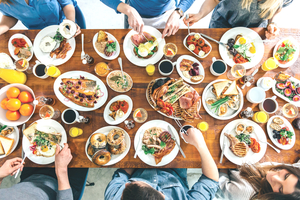
Strong workplace food programs rotate local restaurants, cuisines, and formats. When you can access 5-7 different restaurants everyday - it’s almost impossible to find something you wouldn’t be grabbing if you left the office anyway. A work lunch delivery service prioritizes variety and keeps participation steady because it mirrors how people choose food outside the office.
When the same tray shows up every Tuesday, interest fades. Fewer people sign up, more food goes untouched, and before long - employees are back to grabbing something offsite because it feels fresher than what’s being offered. That menu fatigue shuts down participation fast.
Traditional corporate lunch delivery and cafeteria setups rely on headcount estimates. Someone guesses how many people will be eating and orders food based on restaurant recommendations.
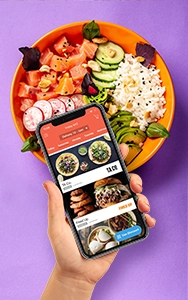
Participation-based ordering changes that dynamic. Employees order individually within a centralized system. Production aligns with actual demand and everyone can order exactly what they want and have it delivered at the same time.
When attendance fluctuates, this model absorbs the variability instead of magnifying it.
When an office lunch delivery service lacks structure, information quickly gets scattered across different spreadsheets, email chains, or Teams messages.
A strong work lunch delivery service centralizes ordering so employees choose their own meals within defined parameters. HR and office managers aren’t manually collecting preferences or reconciling payments.
Over 32 million Americans live with food allergies. That number doesn’t account for religious diets or other dietary needs. If employees have to repeatedly explain what they can’t eat, they’ll stop expecting the free lunch to apply to them.
Without clear labeling, ingredient transparency, and consistent vendor standards to prevent that friction - people will get left out of the most important workplace bonding opportunity.
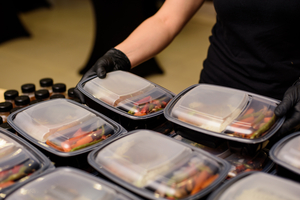
A dependable work lunch program gives companies more than vendors; it also gives them oversight. Fooda’s software offers insights into vendor rotation, quality control, attendance tracking, problem resolutions, and more.
When all the pieces of your initiative are handled centrally, the program stays stable instead of fading out after the first few months.
A work lunch delivery service doesn’t have to mean free lunch every day forever. It can. But plenty of programs work without that level of spend. The structure just needs to match how your office actually runs.
Fully covered corporate lunch delivery programs naturally see the highest engagement. But subsidized models still improve participation and office culture without creating open-ended expenses. Anchor-day structures are increasingly common because they reflect real occupancy data.