Nearly 70% of organizational change initiatives fail. Not because the idea was wrong - but because the transition was mismanaged. People were left in the dark, timelines fell apart, and resistance snowballed into full-blown roadblocks.
It doesn't matter if you're migrating to new software, reorganizing departments, overhauling your benefits package, or introducing new workplace perks. Change on an organizational scale is hard, and winging it almost never works. That's why a structured change management process is necessary for successful execution.
This post looks into the fundamentals of organizational change management, why it matters, and how to implement it step by step - with workplace food programs as a real-world example of how to get it right.
Change management is the process of transitioning organizations from a current state to a desired future state using a systemic and structured approach. It heavily involves managing the people's side of change to address resistance, drive adoption, and provide necessary support through transitions.
Established frameworks like Kotter's 8-Step Process and the ADKAR model provide structured approaches to managing these transitions. While the specific methodology varies, the core principles remain the same: align on the vision, communicate clearly, support people through the transition, and reinforce the change over time.
Businesses need effective change management to reduce operational disruptions and create a seamless transition as they:

Without a strategic approach, change becomes chaotic. Teams interpret priorities differently, timelines slip, and small misalignments snowball into major setbacks.
Here's why a structured process makes all the difference:
A defined change management process gives every team and stakeholder a shared framework to follow. Without one, departments tend to solve problems in silos - resulting in improvising their own workarounds and working off different timelines.
A structured approach keeps everyone aligned and moving in the same direction.
People are far more likely to support a change they understand.
A strong change management plan involves communicating the what, why, and how early and often - so employees know what's happening, how it could affect them, and what their role is in the transition. That kind of clarity builds confidence and strengthens trust in leadership.
Employee resistance is one of the most common reasons change initiatives stall. Effective change management helps you identify likely friction points in advance and address them proactively. This could mean: providing hands-on training, creating feedback loops, or adjusting the rollout timeline to give teams more room to adapt.
When people understand the purpose behind a change and have the tools and support to act on it, adoption happens faster and with fewer setbacks. Instead of a drawn-out transition with low engagement, you get a clearer path to measurable results with higher participation rates, shorter ramp-up times, and fewer rollbacks down the line.
Most organizations recognize when something needs to change. The hard part is actually making it happen, especially when the scope feels overwhelming and no one's sure where to start.
These six steps break the process down into a clear, repeatable framework.
Every successful change initiative starts with alignment. Before jumping into execution, leadership needs to clearly articulate three things:
For a workplace food program, this might look like: The current cafeteria vendor has low participation and poor feedback. The purpose is to offer more variety and flexibility to encourage employees to eat on-site. Success looks like 60%+ daily participation within six months.
When the problem, purpose, and outcome are clearly defined, every decision that follows has a reference point.

Change stalls when ownership is unclear. Early in the process, identify who needs to be involved, what decisions they own, and where sign-off is required.
Think about this in three tiers:
For a workplace food program, this could be as lean as a single coordinator managing the relationship with a food service partner like Fooda, with a facilities manager and department leads playing supporting roles. The key is that everyone knows what they're responsible for from the start.
A lack of communication is one of the fastest ways to create resistance. People don't push back on change because they dislike it - they push back because they don't understand it.
Build a communication plan that covers three phases:
A few tactical best practices include:
This is where strategy becomes execution. Step 1 defines the what and why, whereas step 4 maps out the how and when.
Structure your rollout into clear phases with specific tasks, owners, and milestones. Breaking it into stages makes the transition feel more manageable and gives you built-in checkpoints to course-correct before small issues become big ones.
Here's what this might look like for a workplace food program:
The goal is to make the rollout predictable. When people can see what's happening and when, it reduces anxiety and keeps momentum moving forward.
Launching the change is only half the battle. If employees aren't actively supported through the transition, participation will plateau - or worse, decline.
When you take the time to check in with employees at every stage, you’re actively supporting them through engagement:
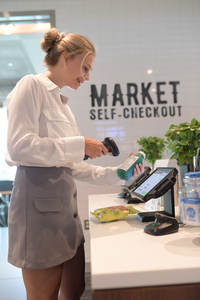
When you have real-time feedback loops, whether through pulse surveys or informal check-ins, employees turn into active participants rather than passive recipients of change.
With change, sometimes people need an extra nudge to try something new. Subsidies, rewards programs, and small perks can go a long way in driving early adoption.
For example, a return-to-office strategy might pair food subsidies with transit reimbursements to make on-site days more appealing. With a solution like Popup Restaurants or Orange by Fooda, employees earn loyalty points on every order, which they can redeem for future meals, giving them a built-in reason to keep participating.
The bottom line: don't assume that launching the change is enough. Build ongoing support and motivation into the process from day one.
A successful launch doesn't mean the work is done. Change management is an ongoing process, and the first version of any rollout is rarely the final one.
Track metrics tied directly to your Step 1 goals. If you defined success as higher participation, measure daily order volume and unique users. If the goal was improved satisfaction, run regular sentiment surveys. If it was attendance, compare on-site headcounts before and after launch.
For a workplace food program, key metrics might include:

Use what you learn to iterate. Maybe the menu needs more variety. Maybe the ordering window is too narrow. Maybe one office location is thriving while another is lagging.
The data will tell you where to focus and consistent measurement is what turns a good rollout into a lasting, successful program.
You've got the framework: define the change, assign ownership, communicate clearly, plan the rollout, support adoption, and measure results. Now the question is: Who's helping you execute it?
Fooda's tech-powered food solutions are designed to make each of those steps easier, whether you're launching a workplace food program from scratch or replacing one that isn't working.
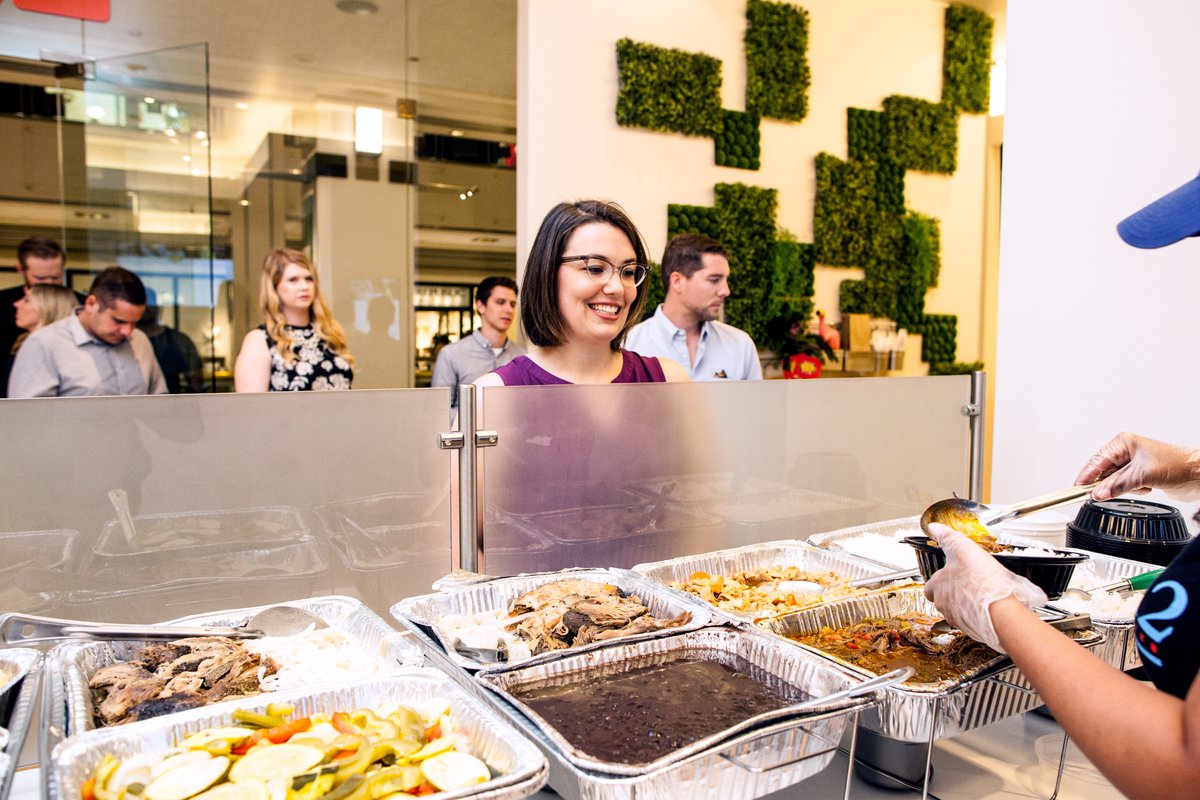
Not every organization is ready (or able) to invest in a full cafeteria buildout on day one. Fooda gives you the flexibility to start small and scale up as adoption grows, so you're not committing to drastic infrastructure changes before you've proven the concept.
With this range of solutions, you can mix and match based on what your organization needs - start with one or two and layer in more as adoption grows.
This phased approach isn't theoretical. For instance, a major U.S. airline implemented a "building block" program with Fooda that scaled alongside their return-to-office strategy:
The result: a seamless transition that matched the pace of organizational change instead of getting ahead of it.

One of the biggest barriers to adoption is complexity. If the new system feels harder than what employees were doing before, they’ll be less likely to use it.
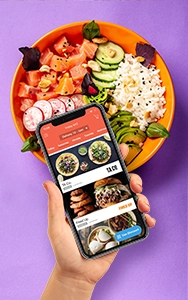
Fooda's app and customized company webpages let employees browse menus, order ahead, and pay contactlessly - all from their phone. Mobile order-ahead means they can place an order during a meeting and pick it up when they're ready, with no lines and no waiting.
Getting employees to try a new food program is one thing. Getting them to keep using it is another. Fooda's built-in loyalty program lets employees earn points on every order, which they can redeem for future meals. It's a simple, ongoing incentive that keeps participation high long after the initial launch excitement fades.
Offering free or subsidized food at work is one of the most effective ways to drive on-site attendance and reward employees. But managing subsidies manually is a headache.
Fooda lets you set up and customize subsidies directly through the app: allocate different amounts by team, add or remove members, and adjust funding on the fly. It gives you full control over your food-based incentives without the administrative burden.
Ready to roll out a workplace food program that employees adopt and keep coming back to? Get in touch with Fooda today.

Project management focuses on the tasks, timelines, and resources needed to deliver a specific outcome. Change management focuses on the people side - how to prepare, support, and guide employees through the transition so they actually adopt the change. The two work hand-in-hand, but change management specifically addresses the resistance, communication, and behavioral shifts that project plans alone don't cover.
The most frequently cited reasons include unclear goals, poor communication, lack of leadership buy-in, and underestimating employee resistance. According to McKinsey, 70% of change initiatives fail to meet their objectives and the root cause is almost always a people problem, not a strategy problem.
Leadership sets the tone. When senior leaders visibly champion a change employees are significantly more likely to buy in. McKinsey's research found that organizations with clearly engaged leadership are up to eight times more likely to succeed in their change efforts.






%2010.49.58%E2%80%AFa.%E2%80%AFm..png)