Your CEO wants employees back in the office, and your CPO sees company culture slipping and wants to do something about it. As the Chief of Staff (CoS), you’re the one who inherits these “make the office work” mandates, whether that means driving RTO attendance or rebuilding culture.
A workplace food program offers a rare opportunity that moves both goals at once, because the same daily meal that pulls people in also gives them a reason to stay and connect.
This post breaks down the role a Chief of Staff plays in carrying out executive priorities and how office food perks make that job easier.
As a strategic partner to senior executives, the CoS is the connective tissue that holds an organization together, which matters most in the cross-departmental work no single team owns. Core responsibilities include:

Between all this cross-functional work, a Chief of Staff needs a quick win that pays off in more than one place. Office food perks do exactly that, working as both an incentive to come in and a daily ritual that ties people to company culture.
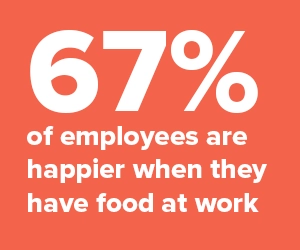
The data backs this up. In a 2026 Fooda survey of hundreds of workplace leaders, 83% said food has an impact on culture, and 67% of employees report being happier when food is available at work, which feeds directly into satisfaction and how long people stay. A separate Fooda survey, What’s Happening in the Workplace Now?, found that 80% of employees feel enthusiastic about work when their company provides lunch.
When employees describe what they want from office food, two themes come up:
Free or subsidized meals also remove one of the most common objections to commuting in: the morning scramble. Employees no longer have to wake up early to prepare food, which hands back a few hours each week and makes the commute to work feel less like a cost.
Robin’s 2025 Office Space Report found that perks like catered lunches now rank among the top draws getting people back to the office, and time together onsite is where culture gets rebuilt.
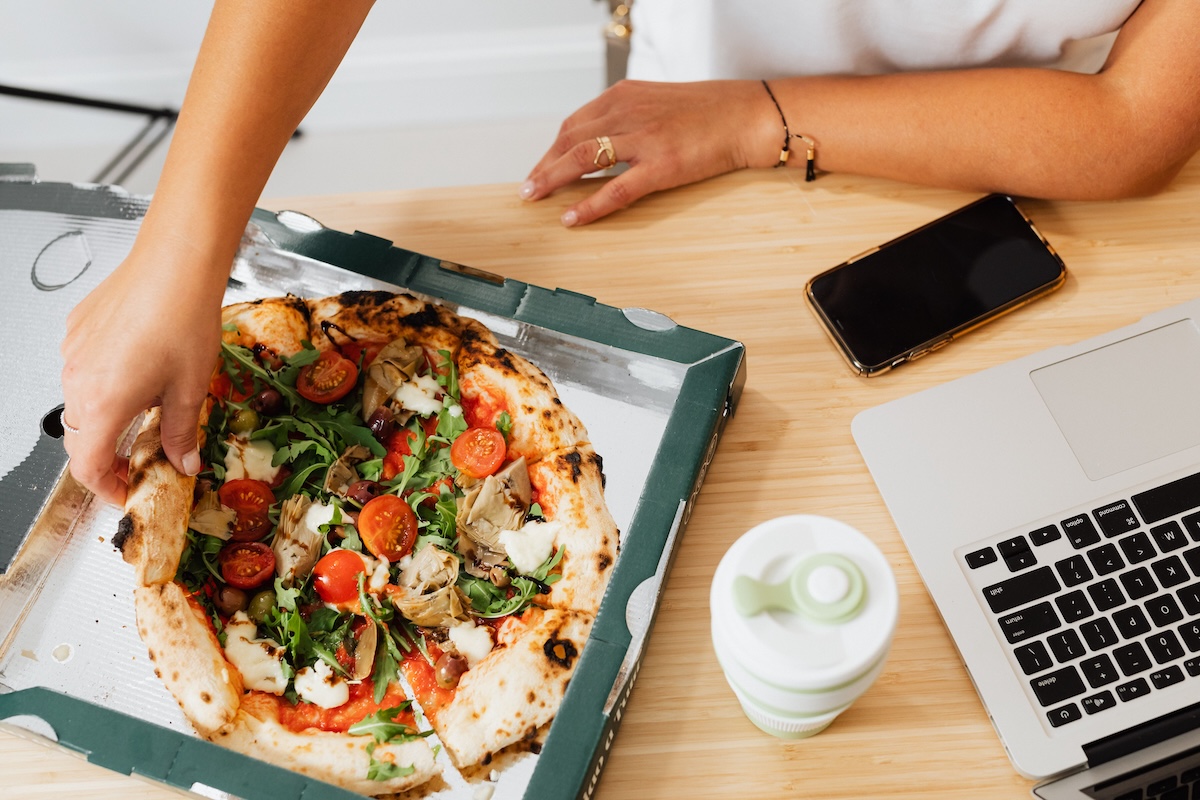
To make food pull double duty as a culture driver, design it around community rather than convenience. Designated spaces for shared meals, teams eating together, and catered events give people the unstructured face time that turns coworkers into colleagues.
A CoS does more than coordinate with facilities and culinary teams. Several core Chief of Staff responsibilities tie directly to whether your lunch program for employees succeeds or stalls.
Start by asking which company-wide goals the program can serve, then build it backward from there so every dollar maps to an outcome leadership already cares about.
Two questions sit at the center here:
The CoS owns the budget, which means coordinating with executives and finance on the specifics, including the quarterly spend and the per-person daily allowance.
Once the program is live, you’ll track cost per meal and waste-reduction percentages. Watching these numbers is what lets you redirect spend toward what people use and defend the program’s food program ROI when budgets tighten.
Your cross-functional vantage point makes you the natural liaison among every team the program touches: facilities for equipment and space, finance for budget approvals, culinary for prep and inventory, and HR for employee feedback.
This coordination matters because any single gap can stall the entire rollout. Finance might approve a full cafeteria buildout, but without confirming the physical space with facilities, the budget sits idle. Likewise, HR’s read on satisfaction with the current menu only helps once you relay it to the culinary team.

Your choice of vendor carries much of the program’s success or failure. A supplier who lets the pantry run empty or takes months to repair a vending machine erodes trust in the whole effort.
As CoS, you oversee sourcing end to end: managing the request for proposal (RFP), then vetting, negotiating with, and onboarding food vendors, catering services, and inventory suppliers.
After launch, you stay close on invoicing, servicing, and maintenance. If produce shows up subpar or snacks arrive expired, you’re the one who raises it and holds the vendor to the standard.
Long cafeteria lines, late deliveries, piling waste, and supply-chain hiccups all signal that something in the program needs attention. Your job is to find the friction point, trace it to its root with input from the relevant teams, and put standardized processes in place so it doesn’t recur.
Finally, the CoS reports back to executives on food program ROI and the program’s effect on the daily employee experience.
Pulling together metrics on cost savings, productivity, participation, and survey feedback gives leadership a clear read on performance. Those reports make the business case for continuing the program and flag exactly where it needs to change.
There’s a lot of work that goes into running a successful workplace food program.
That’s where Fooda comes in and offers a vast range of employee meal solutions to help you find the perfect solution. You can tailor your workplace food program by mixing and matching the following based on your budget, headcount, space, and needs:
No matter which solution you choose, Fooda’s technology lets you seamlessly manage everything in one place. You can automatically get order data and track expenses for accurate reporting. These insights can also inform how you schedule restaurants and which vendors you work with.
Fooda also lets you effortlessly manage your meal subsidy program, with the option to add members and adjust stipends on a team or individual level. No more going back and forth with finance teams, and no more reimbursement hassles.
Ready to experience the Fooda difference in your office? Get connected with us today!

A Chief of Staff (CoS) is a senior strategic partner to the CEO or other C-suite executives. They act as an advisor, problem-solver, and proxy, turning big-picture vision into operational execution and serving as a central hub across the company.
No. While both deal with people and organizational strategy, their purposes differ. The Chief of Staff is a strategic right hand to a top executive, focused on driving business goals, overseeing projects, and extending the leader’s operational reach. An HR executive focuses on the workforce itself: recruitment, payroll, compliance, employee relations, and workplace culture.
A Chief of Staff is a force multiplier for the CEO, concentrating on strategic alignment, high-priority projects, and executive efficiency. A COO is an operational executive who owns the company’s day-to-day mechanics, manages department heads, and keeps the organization running at scale.
Per-employee cost depends on the model and how often you serve. A daily subsidized lunch program runs differently from an occasional catered event or a self-serve pantry. The number worth tracking is cost per meal consumed, because a program that scales to real attendance avoids paying for food no one eats. Setting a daily per-person allowance and reviewing it each quarter keeps spend predictable.
Tie the program to outcomes leadership already tracks: in-office attendance on program days, participation rates, retention among teams with access, and cost per meal versus waste. Pairing those figures with employee satisfaction survey results turns a line item into a defensible business case.
The strongest fit for hybrid teams is a model that flexes with daily headcount, since attendance swings from one day to the next. Office lunch delivery and popup restaurants both scale to actual demand, so you serve enough on busy days without cooking for empty desks on quiet ones.
They can, because free or subsidized meals remove a real friction of commuting in and add a shared reason to be there. Food works best as a return-to-office incentive when paired with clear in-office expectations, so people associate showing up with both a good meal and meaningful time with their team.
Employees consistently ask for variety in quality meals and better everyday snacks and drinks, rather than one fixed menu. Rotating options and shared eating spaces tend to land better than a static cafeteria, because novelty and the chance to eat together are what keep people coming back.