A firm handshake accompanied by a smile, both powered by the excitement of closing a big deal. A conversation that starts in the office and continues long after work hours as colleagues, now friends, chat over a shared appetizer at the spot around the corner. A welcoming office space full of employees who bounce ideas off of each other and embrace collaboration rather than avoid it. These moments are at risk as companies navigate the increase of AI usage in the workplace.
To those who have had these experiences before, the feelings of joy and connection are almost palpable. Yet, many employees who are new to the workforce have never experienced these small yet powerful moments. Moments of connection between coworkers are becoming more and more scarce as the dynamic of office culture becomes more and more technology-centric.
As companies navigate hybrid work schedules and the increased usage of technology and AI, human connection in the workplace has fallen to the bottom of the priority list. With this comes an increase in feelings of loneliness and underappreciation, as well as a decrease in job performance and satisfaction. However, this doesn’t have to be the case. By using food to prioritize human connection in an AI-saturated workplace, offices will see more productivity and increased morale amongst employees.
It’s indisputable that the usage of AI has increased in the workplace over recent years. According to Gallup, the number of workers that use AI daily or a few times a week has doubled since 2023. This increase in use is not inherently a bad thing. However, the growing use of AI is affecting workplace culture in a big way.
The truth is, although AI is an exciting prospective tool, companies are still learning how to use it. AI is far from error-free, with the possibility of it being wrong around half the time. Relying on AI as a collaboration partner, rather than working with your team, could do more harm than good. Turning to AI rather than coworkers leads to less meaningful connections in the workplace, increasing isolation and loneliness. That’s not to mention the extra time and work that would go into fact-checking everything.
Employees are also increasingly becoming more anxious about AI taking their jobs. As companies begin to heavily rely on AI and encourage their employees to scale usage, employees are starting to question their value and fear what their future holds. Poor job security and low job control pose a risk to mental health, which negatively affects the connections that people make in the workplace, in turn further decreasing their well-being and productivity.
In theory it may sound like AI is an efficient way to speed up work and get rid of extra costs that come from employing people, but the truth is much more complex. While completely replacing workers with AI is impractical, using AI in the workplace is not. The key is to look at AI as a tool to aid human employees rather than as a replacement for them.

Human skills are more valuable now than ever before. While AI can make things more efficient, it can’t fully replace the skills that real people bring to the workplace.
A person’s ability to build real, human relationships is critical. This is incredibly important both within teams and when working with clients. The humans’ ability to experience emotions and build trust with someone is something that AI can’t replicate. People, especially clients, want to feel seen, heard, and most importantly, understood. When real people are part of the equation, this happens naturally. If you are relying solely on AI to handle customer interactions, odds are they’re getting frustrated, which can result in dissatisfied customers and a poor company image.
Another critical human skill is a person’s ability to make judgement calls. While AI is good at analyzing information, it can’t read the nuances that accompany an in-person conversation or interaction with a client or coworker. AI doesn’t have prior personal experiences that it can draw on to make informed decisions in the moment, like an experienced employee can. If employees stop interacting with each other and customers,these skills can begin to atrophy. Encouraging employees to continue openly communicating with each other will not only help your business run smoother, but it will also improve your employees’ wellbeing.
People are also inherently creative. While AI is able to complete assigned tasks and answer questions quickly, it works by recognizing patterns and reworking them. Human ideas stem from innovation and challenging patterns and standards, which is something that AI is programmed to actively avoid. Partnering with real people in the workplace and building connections with them results in collaborative ideas that AI can’t replicate.

Loneliness is something that affects millions of people across the country. Over half of American adults report feeling lonely, with some of the highest rates found amongst young adults.
This phenomenon influences more than just social life. Research published in the Journal of Occupational Medicine shows that workplace loneliness specifically is correlated to lower job performance, reduced satisfaction, and elevated burnout. When people feel lonely at work, they disengage and aren’t as committed to their company, resulting in lower quality of work and decreased productivity. In addition, employees that feel lonely are often less involved in social interactions with colleagues, which leads to them getting left out of the loop professionally.
On the health front, the U.S. Surgeon General asserts that being socially disconnected has an impact on mortality that’s comparable to smoking 15 cigarettes a day. The negative physical and mental effects of loneliness can lead to health complications, causing employees to take more sick days. Although loneliness can negatively affect employee experience, health, and productivity, there are things that workplaces can modify in order to combat this epidemic. Even something as simple as working to prioritize human connection can make a big difference.
As human skills in the workplace become more important, human connection does, too. As the world shifts toward a tech-first approach and loneliness continues to rise, it’s important to prioritize relationship building in order to support people and uplift the invaluable skills they bring to the workplace.
For many employees, work is one of their primary social outlets. Implementing workplace programs that prioritize employees and improve their experience is a great way to encourage human connection. If employees aren’t able to bond with other people at work, the negative impacts of loneliness begin to creep in. Ensuring they have time and space to interact will help mitigate this problem.
Actively working to foster human connection in the workplace improves the employee experience. People are excited to come into work, increasing job satisfaction and making them more productive. When employees enjoy the work they do and the company they work at, there’s also an increase in employee retention.

Sitting with others and enjoying conversation over delicious food brings people together in a way that few things can.
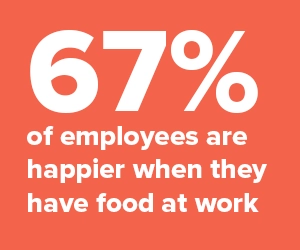
Food at the workplace encourages people to eat together and create new connections. When people eat with colleagues from other teams, they’re organically building relationships with people across the company. This lends itself to better collaboration down the line, and overall improved company culture.
Food is also a great way to drive in office attendance, which in turn fosters employee interactions. If people are in the office together, they’re more likely to have meaningful conversations with colleagues compared to working fully remote.
According to Fooda’s 2026 workplace survey of over 100 companies, 83% of workplace and people leaders say that food has a moderate to significant impact on workplace culture. Prioritizing programs that affect the office's culture shows your employees that they’re a valuable asset and helps their wellbeing.

Partnering with Fooda gives you the opportunity to turn a workplace food program into a valued pillar of company culture. Fooda offers a variety of services that are built to fit the needs of your office. Implementing a workplace food program has never been easier, making it a low-cost, high-impact way to increase human connection within your organization.
Whether you choose Popups for variety, Office Lunch Delivery for convenience, or Pantry and Micromarket Services to give employees a little something extra, implementing a food program in your workplace fosters human connection and shows your employees they are valued.
Regardless of which model you choose, when you encourage employees to eat together, you’re building a community and promoting skills and connections that AI can't replace.
Ready to use a food program to prioritize human connections in the workplace? Talk to a Fooda expert today to learn how you can get started.
Why is it important to have connections in the workplace?
Having meaningful connections in the workplace is important because it helps combat loneliness. Loneliness can negatively affect an employee’s mental and physical health, as well as their job performance and satisfaction. Having connections in the workplace helps people feel less lonely and advance their career, as well as improve their overall well-being.
How can you deal with loneliness in the workplace?
If you are experiencing loneliness at work, the best thing to do is take initiative to create connections within your office. You can reach out to people whose work you’re interested in or someone who you want to collaborate with. As you continue to foster these relationships, creating new ones will become easier. You can also reach out to your HR department to see about setting up social events. Finding a support system in the workplace is important and will help your mental well-being.
What skills are important in the AI era?
The most important skills to have in an AI era are the ones that AI can’t replace. Things like emotional intelligence, creativity, and the ability to build relationships are all skills that AI can’t replicate, making them invaluable. As AI becomes more popular, it is important to hone these skills before losing them. As AI becomes more popular and people and companies start to lose these skills, they will only become more important and valued.