Food at work used to mean access to a vending machine and a coffee pot in the break room. Today, it's one of the most visible, most-used benefits a company can offer. As return-to-office expectations grow and the competition for talent increases, more companies are turning to employee meal programs as a way to improve daily employee experience.
However, not all meal programs are created equal. A static, one-size-fits-all catering menu is quickly forgotten. The programs that move the needle on satisfaction and retention are the ones built around choice, variety, and flexibility.
This article breaks down what a customizable employee meal program looks like, why it matters, and how to plan and implement one in your workplace.

A customizable employee meal program is a workplace food benefit designed around employee preferences rather than a fixed, employer-selected menu. Instead of everyone eating the same catered meal from the same vendor every day, employees get to choose what they eat, when they eat it, and how much they want to spend out of pocket.
This can take a few different forms:
The common theme across all of these formats is their flexibility. Employers have flexibility in terms of cost and logistics, and employees have flexibility in terms of what they order each day.
Recurring and customizable employee meal programs are a very impactful employee benefit. Alongside properly fueling staff, employee meal programs make employees feel valued and create a sense of community within the office. Implementing programs that are customizable and adapt to the wants and needs of your employees can impact your office in a number of ways.
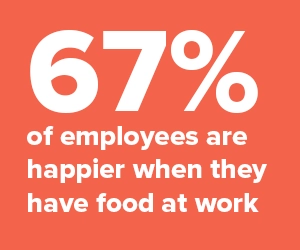
Food is one of the few benefits employees interact with every single day, making it a powerful, recurring signal of how much a company invests in its people. Employee meal programs are often more memorable to employees than benefits they only think about once a year. By implementing an employee meal program, you’re communicating to your employees that you value their well-being, which in turn makes them want to stay with the company, helping with retention. It also creates a competitive edge for recruitment and shows prospective candidates that your company is a place worth working for.
When quality food is available on-site, employees spend less time leaving the building or coordinating personal takeout orders, which results in more time spent in the office collaborating with coworkers. Having high-quality food available on-site also encourages employees to eat lunch rather than skipping it,making them more productive throughout the day.
It’s difficult for a single fixed menu to properly serve everyone’s individual needs. A customizable program makes it far easier to accommodate dietary preferences and restrictions such as vegetarian, vegan, gluten-free, halal, kosher, and allergen-specific needs without singling anyone out. By starting an employee meal program that works for everyone, employees feel seen and included, making them more likely to use the program. When more employees are able to participate, it encourages them to sit with each other and find community within the workplace.
For hybrid and flexible workplaces, a great meal program gives employees an additional reason to choose in-office days. When people have a community at the workplace fostered by a recurring meal program, they are more likely to come into the office and enjoy the time they spend there. If employees are excited to come in to work, they’re more likely to do better work while in the office.
Compared to running a full in-house cafeteria with dedicated kitchen staff and equipment, many customizable programs, like pop-up restaurants or pantry solutions, offer lower overhead while still providing employees with variety and quality. When factoring in how much it costs to replace a single employee (most of the time ranging from 50-200% of their yearly salary depending on their level), an employee meal program that keeps just one person at the company more than pays for itself.
Below are a few best practices to keep in mind when building a customizable employee meal program. Implementing these will help make your program as successful as possible.
Want to implement a customizable employee meal program but don’t know where to start? These steps will guide you through building a program and making sure it’s a benefit employees look forward to using.

Planning a customizable employee meal program can be difficult. With so many moving parts, it’s easy for things to fall through the cracks and ultimately hurt the success of your program. In order to help things run more smoothly, avoid making these common mistakes:
Building and managing a customizable meal program in-house takes significant operational lift. From sourcing vendors and managing logistics to tracking dietary needs and keeping the offerings fresh week after week, it’s easy for building and managing an employee meal program to turn into a second job. Fooda is designed to remove that burden.
Through rotating local restaurant Popups, workplace pantry solutions, office lunch delivery, and boxed lunch or event catering, Fooda handles all the logistics of your customizable employee meal program for you.
For companies looking to move away from a traditional, single-vendor cafeteria altogether, Orange by Fooda offers a full cafeteria replacement built on the same principle of variety and choice.
Customization is what separates a meal program employees really use from one that quietly collects dust. By starting with employee input, building in real variety and flexibility, and choosing an implementation approach that matches your workplace, you can turn lunch from an afterthought into a genuine driver of culture, satisfaction, and retention.
Ready to bring a customizable employee meal program into your workplace? Talk to a Fooda expert to see which format fits your team best.
How much does an employee meal program cost per employee?
Costs vary widely depending on the format and how much of the meal the employer covers. A partially subsidized program (employees pay a portion) can run significantly less than a fully employer-paid model. Pantry and snack programs tend to be the most budget-friendly, while daily catered lunches or fully-covered meal credits are the most expensive but typically drive the highest participation and satisfaction. Most providers offer tiered options so companies can match a program to their budget.
What's the difference between a meal stipend and a meal program?
A meal stipend is a fixed amount of money (often added to payroll or a benefits card) that employees can spend on food however they choose, with little employer oversight. A structured meal program, by contrast, is typically managed through a platform or provider that curates vendors, tracks redemptions, and ensures variety and dietary coverage — offering more oversight, data, and consistency than a stipend alone.
How do you accommodate dietary restrictions in a company meal program?
The most effective approach is to survey employees upfront on allergies, intolerances, and preferences (vegetarian, vegan, gluten-free, halal, kosher, etc.), then work with vendors who clearly label ingredients and rotate in options that cover those needs. Programs that offer daily or weekly variety across multiple restaurants make it easier to accommodate a wide range of dietary needs than a single fixed caterer.
What are the best employee meal program ideas for hybrid workplaces?
For hybrid teams, flexibility matters more than volume. Popular approaches include scheduling catered meals or pop-up restaurants on in-office anchor days, offering meal credits employees can use only when they're in the building, and pairing a lighter pantry/snack program with occasional catered days to reward in-office attendance without overspending on days when attendance is low.
How do employee meal programs improve retention?
Food is one of the most frequently used and visible workplace benefits, which makes it a strong, low-friction way to reinforce that a company invests in its people. Programs that offer real choice and variety are associated with higher day-to-day satisfaction, and companies often cite meal programs as a factor employees mention when asked what keeps them coming into the office or staying with the company.
How do small businesses offer employee meal programs on a limited budget?
Smaller companies often start with lighter-touch options like a stocked pantry, occasional catered lunches for meetings or milestones, or a modest weekly meal credit rather than daily fully-covered meals. Many providers offer scalable programs that let smaller teams start small and expand as headcount or budget grows.