As the people directly in charge of day-to-day employee experience, office managers are responsible for a lot of moving parts. Even perks meant to improve said experience, like workplace food programs, can be a headache to manage as you deal with fluctuating headcounts and diverse dietary preferences.
But it doesn’t have to be this complicated.
Office lunch delivery services help you simplify employee food orders, offering one of the easiest ways to keep employees engaged, minus the logistical nightmare.
For office managers who have had to manually take everyone’s orders, call restaurants, and coordinate with delivery drivers, workplace food delivery may seem like a hassle. But modern office lunch delivery solutions can solve some of the biggest challenges that you face with traditional workplace food programs.
Have you ever ordered way more food than you needed? Or not had enough for everyone? It’s tough for office managers to place accurate orders when headcounts fluctuate daily.
And though this problem is more noticeable in hybrid offices, it’s a problem all office managers have to deal with. Calendars help you keep track of everyone’s schedules and days off, but you can’t anticipate when people might call in sick or have an unexpected emergency. As a result, you’re left having to guess how much food you’ll need.
An office lunch delivery service that lets employees order their own meals will save you the trouble of having to tally headcounts every day. Orders are placed only for employees who come in, taking the guesswork out of the equation.
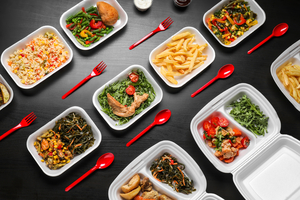
David from Accounting has a shellfish allergy and Becky from Sales needs gluten-free meals. Meanwhile, Clara from HR is deathly allergic to tree nuts, but her teammate Samson wanted the linguine al pesto.
Being an office manager who’s in charge of employees’ food orders means keeping careful track of everyone’s allergies and dietary preferences. But what happens if Becky’s gluten sensitivity slips your mind during a busy day, or if someone else is in charge of food orders while you’re away?
A spreadsheet makes tracking easier, but that also means cross-referencing it every time you place a food or catering order, taking up valuable time. And there’s still room for error.
Employees account for their own preferences and allergies as they place their orders. You don’t need to remember who eats what as you painstakingly organize that day’s delivery. People can track their own dietary accommodations, making daily delivery safer and cutting down on heavy admin work.
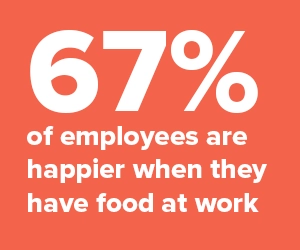
Many office managers are well aware of how a workplace food program can change employee attitudes towards work. They see how free food days bring in more people. They recognize the energy shift when people return from a satisfying lunch break. And research supports this. A survey of 1,000+ office workers found that 67% of employees were happier when they had access to free food at work.
What sets them back is the budget constraints. Cafeterias are usually off the table for mid-sized companies because they’re expensive to implement. Even if there’s a budget for special buildouts and equipment, you have to account for ongoing costs.
Office lunch delivery is a cost-effective solution that’s easy to implement, regardless of space or budget. But even with deliveries, the costs can rack up pretty quickly after you add tips, delivery fees, and service charges for multiple orders.
Say one delivery platform charges 10% fees and expects a 15% tip. You have 45 employees who each order meals worth around $15 using the platform. You could end up spending an extra $168 on the order. That’s enough to feed over 10 additional employees.
Grouping employee food orders into a single delivery helps you avoid the per-order charges that eat away at your budget. Employees choose their own meals from pre-selected restaurants, and a single delivery driver picks up those orders and brings them to your office in one delivery.
Some providers might even charge a flat per-day rate to make daily food deliveries more affordable and keep costs predictable.
The fallout from ordering too much food isn’t pretty, leading to messy breakrooms, piling garbage, and wasted food. And office managers are the ones that have to deal with it.
Food waste isn’t an issue exclusive to catering orders, where you rely on guesswork to anticipate demand. It’s also a common scene in cafeterias, where ingredients are bought in bulk and food prep is done based on anticipated attendance.
Food service businesses generated 12.5 million tons of surplus food in 2024. That’s a significant environmental impact. Food waste also equals a significant money drain. It just doesn’t make financial sense to keep spending money on food your employees aren’t eating.
Food prep is done based on exact demand as employees only order what they’ll eat. Restaurants prepare exactly what employees order, nothing more, nothing less. This lets you adjust operations daily, so you can meet employee demand while automatically reducing food waste.

Even if your office cafeteria serves great food, employees will eventually get tired of rotating between the same 3-4 entrée options every week. The same goes for repetitive catering options where you rely on the standard sandwich and pizza rotation.
Menu fatigue is something office managers always have to look out for, because when people are bored with the menu, they’re less enthusiastic about participating in your employee lunch programs. That’s why 80% of leaders in Fooda’s 2026 Workplace Lunch Report say variety is important to their food program.
Office lunch delivery is one of the easiest ways to tackle menu fatigue, as variety is naturally baked into the program. Employees place orders from local restaurants of their choice instead of being restricted to a fixed menu selection.
Setting up a food program doesn’t have to add more logistical headaches to your office manager duties. Here are some best practices to build a simple, repeatable workflow. \
Managing employee lunch programs often involves too much guesswork and daily coordination. Demand-based models like office lunch delivery services let you scale effortlessly based on fluctuating headcounts.
With employees choosing their own meals, orders are placed based on actual attendance. So there’s no risk of ordering too much or not enough. And it saves you the trouble of having to anticipate how many people will come in or how much food you’ll need on a given day. This flexibility works especially well for offices with hybrid team setups where headcounts fluctuate daily.
The whole point of having a workplace food program is to engage your employees and give them a better experience at work. Menu fatigue defeats the purpose, as employees grow increasingly tired of the limited meal options.
Offer more variety by partnering with local restaurants instead of relying on a single cafeteria menu or resident restaurant. Provide them with 4- 5 different restaurant options each day and rotate between cuisines. That way, employees always have something new to look forward to, whether it’s authentic pho from a small Vietnamese place downtown or tacos from a viral Mexican food truck.
It takes time to note down everyone’s orders and then call five different restaurants to place your orders. Plus, there’s always a risk of restaurants missing an order or getting it wrong. And as the office manager, you’re the one who has to fix it when that happens.
A centralized platform that allows employees to place their own orders takes that weight off your shoulders. Employees can browse menus and select items directly through the system, minimizing the risk of errors and miscommunication.
Fooda lets you “outsource” your office manager duties with an Office Lunch Delivery service that’s easy to manage.
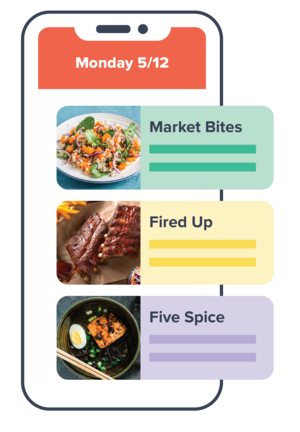
Fooda picks out a handful of top-rated local restaurants that rotate daily. With a network of 4,500+ local restaurant partners, there’s enough variety to keep employees engaged and accommodate diverse dietary preferences.
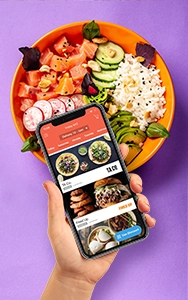
Employees browse menus on the app and pick their own meal, with the option to mix and match items from different restaurants. Someone could get coconut mochi from a Japanese dessert shop along with the chicken tikka meal from a popular Indian restaurant.
You even have the flexibility to mix Fooda Delivery with other services. This gives you the freedom to bring in Popups on busier days, rely on Delivery on low-traffic days, and arrange Corporate Event Catering for special occasions.
Meanwhile, Pantry solutions help you upgrade the snacking experience with a product mix that’s tailored to your employees’ preferences.
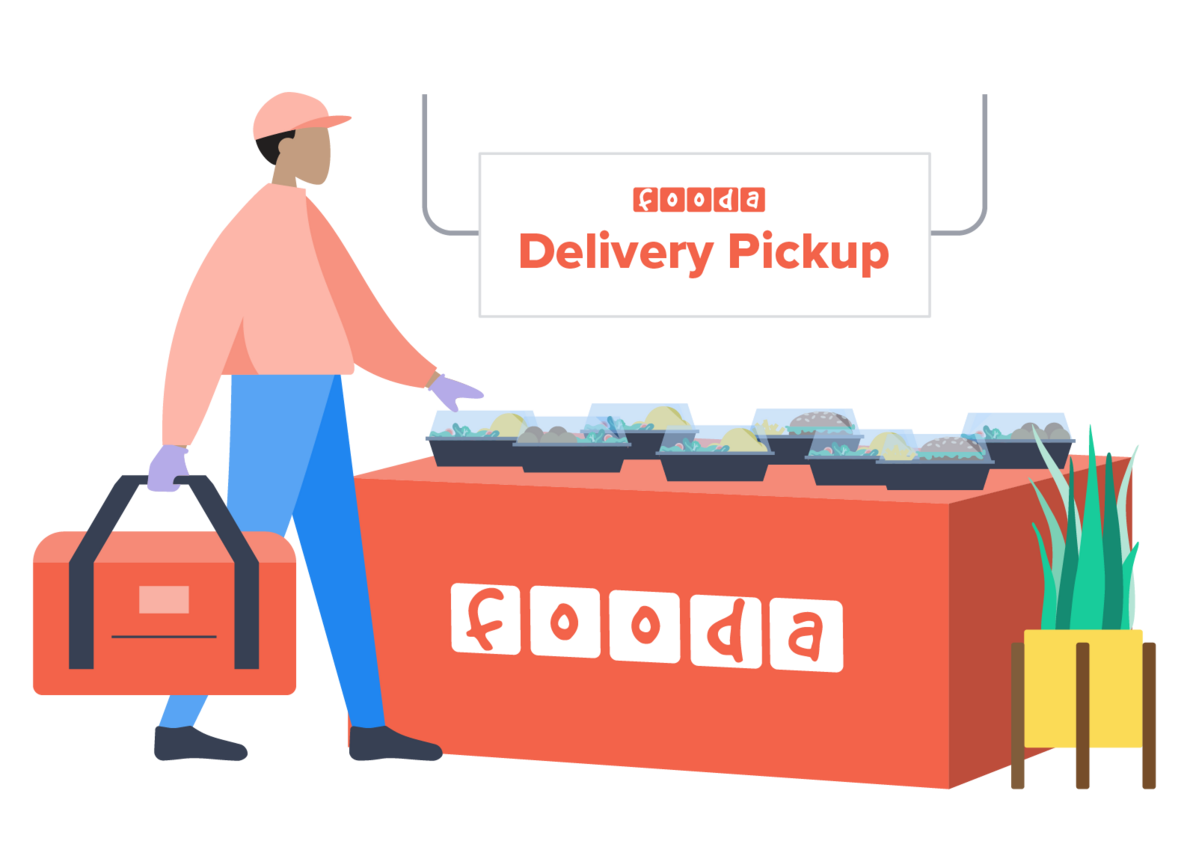
Fooda also handles the logistics, with a dedicated driver bringing all your orders in a single delivery. Every delivery is dropped off by the same person, so they’re already familiar with your building and team schedule, saving you the trouble of having to coordinate with a new delivery driver every time.
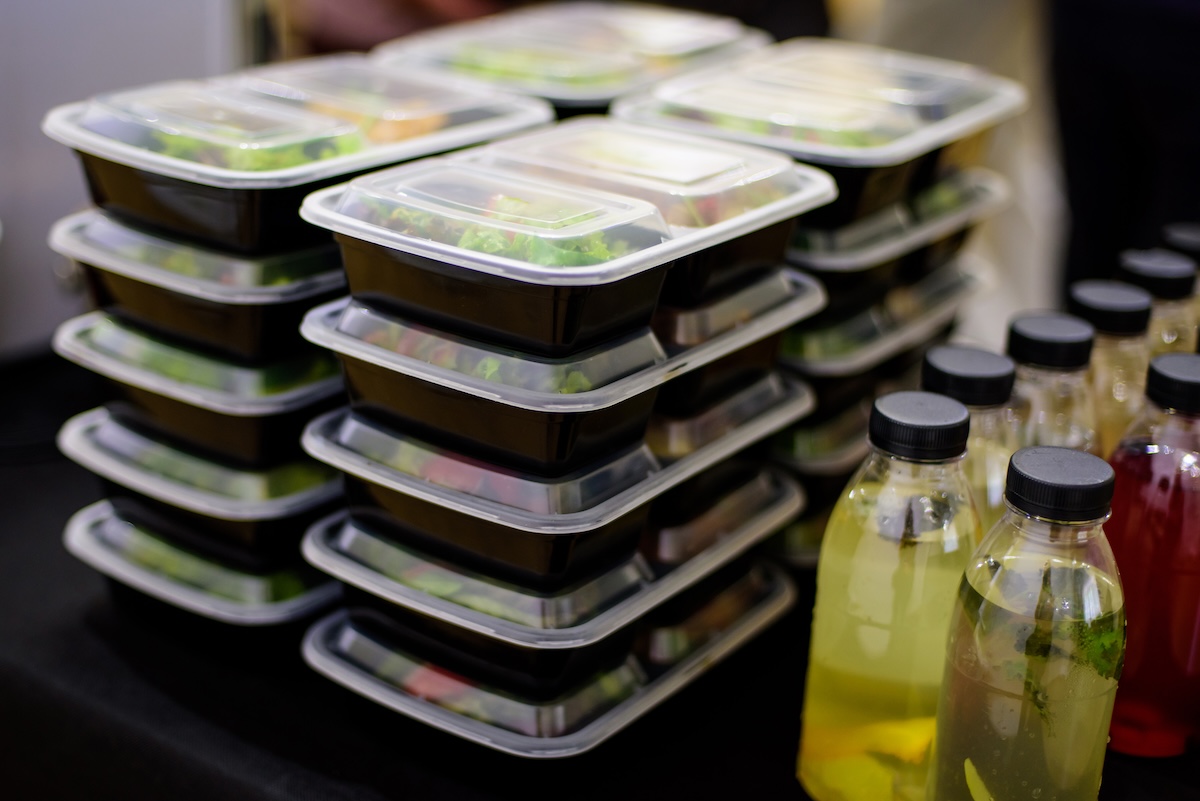
Names are printed on each order, so employees can quickly track down their meals and enjoy lunch with the team.
Fooda uses group pricing to keep costs low. Employers pay a single flat rate for delivery. No exceptions, and no surprises. Daily lunch deliveries become much more cost-effective when you eliminate the per-order fees, service charges, and tips.
Employees can pay for their own meals while placing their orders, simplifying the billing and payment process. So office managers no longer have to coordinate with finance teams and restaurants to get invoices approved.
For employer-paid meals, subsidies are automatically applied during checkout. That way, you can effortlessly subsidize employee meals and skip the reimbursement chaos. Managers can also easily adjust subsidies in the app, quickly adding or removing employees as needed.
Want to streamline daily employee meals with Fooda Delivery? Talk to us today.
How much does office lunch delivery typically cost per employee?
This varies heavily based on your provider. Some offer flat rates and others charge per employee. At Fooda, we charge a flat rate for each delivery, keeping costs predictable.
The other major determining factor is subsidy amount and the number of employees you’re serving. Employee meals typically run $10-$18 per person, but employers can choose how much to subsidize. This is entirely dependent on individual budgets and participation goals, with higher subsidies typically resulting in higher participation.
What’s the difference between office lunch delivery and corporate catering?
Corporate catering is typically centered around specific events or meetings, while lunch delivery operates daily. With catering, food is prepared in bulk and served on site. With delivery, employees order their own meals from various restaurant options. In both cases, food is ideally dropped off in a single delivery.
Is office lunch delivery worth it for smaller offices?
Yes. Lunch delivery can be the most viable and cost effective meal program for smaller offices, as it eliminates waste and has lower overhead costs than other meal program models. Group-order delivery platforms consolidate the orders into one bulk delivery, cutting down on overall costs, making them manageable, even for teams of 20-30 people.
What are the responsibilities of an office manager in a workplace food program?
When it comes to a workplace food program, an office manager is responsible for tracking budgets, managing vendor relationships, accommodating dietary restrictions, and overseeing inventory. They’re also often asked to coordinate billing, invoicing, subsidies, and stipends with financial services.