Corporate dining is going through a seismic shift. It’s not exactly an earthquake, but if you ask around at enough business conferences and executive boardrooms, it’s clear that the old status quo of how companies manage lunch meal programs are changing.
The old cafeteria model is dying, with participation plummeting while fees skyrocket. Even fast-food options are steadily losing ground to in-person deliveries ordered through smartphone apps. If employers want to get serious about providing better employee lunch options, they need to start rethinking what’s possible.
When workers have ready access to truly great food programs, it quickly becomes one of their favorite benefits. These programs can take a variety of forms, from Popup Restaurants to employer-subsidized catering, but they all treat corporate dining as a hiring and retention tool rather than an obligation.
Employee meal programs can reduce employee turnover, boost productivity, build company culture, and support employee wellness initiatives. There are a lot of reasons to implement one of these programs, but it needs to be done right to have maximum impact.
Oftentimes, traditional meal programs can create problems rather than solve them. Employees scatter in search of lunch, they quickly become dissatisfied with the quality of food, and menu options grow stale.
Here are five ways to address these problems and give your lunch program an upgrade:

When workers leave the office for lunch, they take their productivity along for the ride. Employees end up racing through traffic for fast food, then coming back late and losing time as they settle back into their office routines.
While some meal plans, such as stipends, encourage this disruption, others make eating at the on-site the best option. Good workplace food programs will limit distraction and reduce employees’ stress around lunchtime.
Working with local restaurants has a lot of advantages. Firstly, it allows you to bring your employees their favorite foods from their favorite places. They can get the food they treat themselves with outside of the workplace at reasonable prices while on the clock. Each city has unique culinary offerings, and taking advantage of them allows you to leverage resources that are readily available to you.
This approach can also help you better establish your presence in the area. You can show that you care about the community you work out of and build positive rapport with a network of local businesses.
If your workplace has a company cafeteria, you’re probably familiar with “menu fatigue.”
Every day you’re served the same handful of menu items, using the same lackluster ingredients and flavors, prepared by a cafeteria staff who has little passion for the food they make.
According to Fooda’s 2026 Workplace Lunch & Food Program Survey, 83% of workplaces said that variety is essential in their food program. That’s why a little variety in the form of a catered meal, an onsite Popup, or even just a delivery from some of the favorite local eateries can go a long way.
It’s no secret that the legacy cafeteria model just doesn’t work in a modern setting. Your team knows they have better options, which is why participation rates are always falling. At the same time, legacy providers are using lower-quality ingredients to keep their own costs low, and asking for increased subsidies to keep their profits high.
It doesn’t have to be this way. It is possible to update the traditional corporate cafeteria in a way that both saves money and adds variety.
Every single one of your workers knows when their food has been prepared by a skilled chef who specializes in authentic, high-quality cuisine. That extra care can make a huge difference in their days.
The cost difference between an exceptional meal and a mediocre one is often negligible, and that’s something a smart company can use to bring great dining options to their employees for a completely reasonable price.
No matter which Fooda program (or programs) you decide to implement, they all have these 5 things in common:
Bringing food directly to the office provides convenience that employees will appreciate. Not having to pack the night before or run out every day will relieve stress around breaks. They can relax instead of rushing through traffic every day, and they’ll come back from lunch refreshed and ready to work.
It also gives them something to look forward to every day. Keeping food on-site encourages coworkers to eat together and helps build company culture. Cross-team collaboration flourishes, lunch becomes an experience rather than an obligation.

With a network of 4500+ restaurants, all Fooda lunches are locally sourced. This lets you build connections within the community, establishing your company as one that truly cares about supporting the local economy.
Keeping it local also helps to support green initiatives. Local restaurants have shorter supply chains, allowing you to reduce your carbon footprint.
Fooda features rotating restaurants, meaning your employees get access to new food every day. Tacos one day, Italian the next, and Mediterranean every Friday makes lunch time exciting again. Your employee meal menus won’t get stale, and everyone will keep coming back for more.
Nobody wants to eat lackluster food day after day, and they certainly don’t want to pay for it. Fooda provides restaurant-quality food at affordable prices.
A Deloitte study found that only 56% of employees believe their executives care about their wellbeing. With easy access to great food, employees will feel appreciated knowing that you’re attentive to their needs and preferences, making them more engaged and committed to their work.
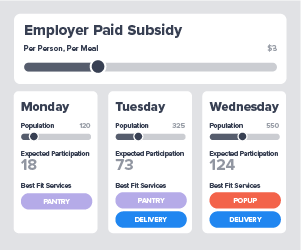
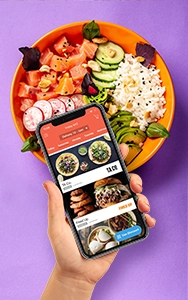
Fooda’s App allows employees to see each week’s meal options ahead of time so they can plan ahead. You can easily set your menus and adjust subsidies. Our platform and team handles all of the logistics so there’s no burden on your administration teams.
Additionally, our scalable, customizable meal programs offer more flexibility than traditional workplace food programs. A UN Climate Change study found that food waste contributes to 8-10% of all greenhouse gas emissions. Fooda allows you to adjust your operations day-to-day so you can stop worrying about having too much or not enough.
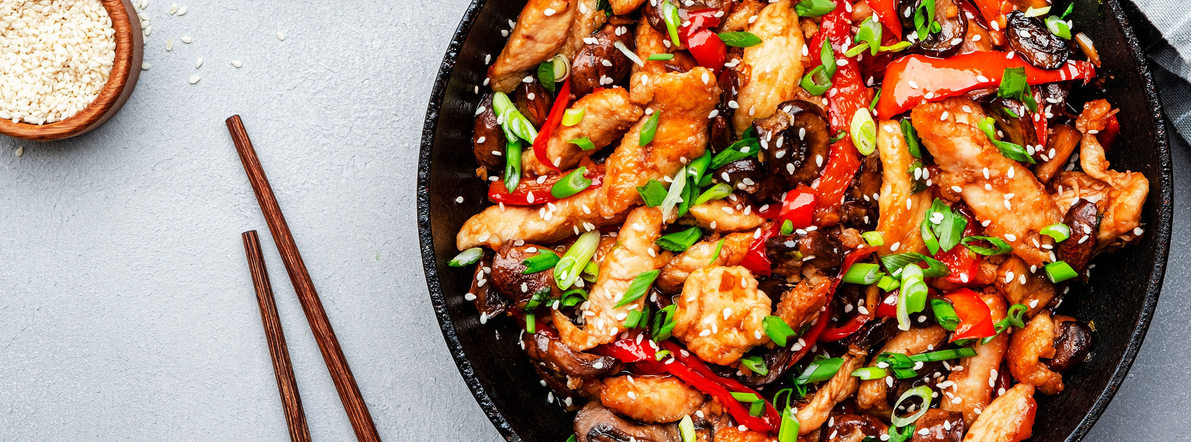
Fooda Popup brings restaurant quality food right to the office. Food is prepared off-site and brought in, meaning employees can have the restaurant dining experience without the need for additional space. With new restaurants cycling through every day, lunch can be transformed into an exciting and dynamic dining experience.
With multiple restaurants to choose from every day, Fooda Delivery gives employees the variety they crave. Order-ahead options allow them to make their lunch plans well in advance. Everything is dropped off together in one reliable, seamless delivery, and you can relax knowing that lunch is taken care of.
Orange by Fooda replaces the traditional workplace cafeteria with a dynamic, ever-changing dining experience. Orange features local restaurant options that change daily, meaning your employee meal menu options never get stale.
Orange is also adaptable, allowing you to adjust the number of offerings based on office attendance. Fooda handles all of the logistics for you, allowing you to focus your efforts where they matter most.
Fooda Catering is the perfect option for recurring events or meetings. Whether it’s boxed lunches, buffet-style, or staffed food stations, you can plan in advance and let us take care of the rest.
By providing better employee lunch programs, today’s smartest companies are turning an old obligation into a powerful tool for attracting new talent, boosting retention, and even reducing costs. Better yet, it’s easier to do than you may think.
If you would like to hear more, get connected with Fooda today and learn what we can do for your workplace.
How do you accommodate dietary restrictions and preferences?
According to FARE, 10% of adults have food allergies, and 17% follow a specific diet. The last thing you want is for such a large percentage of your workforce to be left out of your meal program. With Fooda, you can customize your menu options to accommodate dietary preferences. Pre-ordering allows each employee to choose what they want to eat, meaning everyone can find something they’re happy with.
How do you measure the success of an employee meal program?
Tracking and noting changes in office attendance patterns, employee engagement surveys, departmental efficiency, and retention and turnover rates all help demonstrate the impact of employee lunch programs. Fooda also tracks metrics such as participation rates for you, giving you insight into what your employees want and allowing you to adjust your approach.
Are employee lunch programs cost-effective for smaller companies?
Yes! Fooda’s scalable models mean we can work with you to build a program that fits within your budget. Smaller businesses can adjust what services they offer and how often. Whether that’s delivery three days a week or Popups on busy in-office days, there are plenty of ways to fit employee food programs into your budget.