There was a time when free office lunch was something that was automatically associated with the unicorn startup culture, often to attract and retain top tech talent. Promo videos and PR articles for these companies featured sprawling buffets and fully stocked cafeterias to highlight their meal benefits.
Now employee lunch subsidies are becoming more of an expectation than a perk across companies of all sizes and sectors, not just major tech corporations. And the pressure to offer subsidized lunch for employees is growing as organizations need to create experiences that draw in workers beyond simply enforcing a return-to-work mandate.
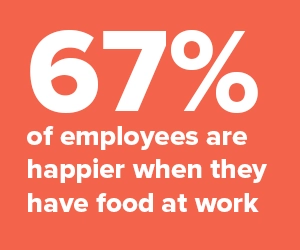
Fooda’s “What’s Happening in the Workplace Now?” survey shows that 80% of employees are more enthusiastic about being onsite when the company provides lunch. This makes sense because food serves as visible proof that you care about your employees, as it directly contributes to their well-being.
Employees who eat healthy meals on time are employees who have the energy and mental capacity to stay focused and productive.
And according to Fooda’s “The True Cost and Benefits of Food at Work” report, 59% of employees expect to work for a company that supports their health and wellbeing.
But to build an employee meal subsidy program, you need to figure out how much you need to spend. Knowing the average workplace food program cost and the average cost of lunch today is a good place to start. You’ll also want to see how much employee lunch subsidies other companies are providing to decide on a reasonable subsidy amount.
This guide provides the answers you need based on millions of transactions across Fooda’s network. Let’s dive in.

To start with, you can only set a reasonable employee lunch subsidy amount by looking at the current market conditions to see how much people are spending on food each day. A $5 daily subsidy may have been enough to alleviate daily food expenses four years ago, when lunch cost around $11.28.
But this might no longer be the case as food prices have gone up significantly in the last few years.
As of September 2026, the average cost of lunch in the workplace stands at $13.90, according to the latest Fooda Price Index (FPI). The FPI tracks millions of orders based on prices set by restaurants within the Fooda network, directly reflecting real market conditions.
In other words, it accurately represents how much the average worker has to spend on lunch each day, which ultimately paints a realistic picture of the cost of living. Knowing this will help you better align your office lunch subsidy budget with the current economy.
Now to get to the real question: how much should you budget for employee lunch subsidy?
This largely depends on the type of subsidy model you’re using. Are you subsidizing the entire meal or only paying for a portion? You’ll also want to look at how much other companies are spending on daily employee meals so you can build a competitive workplace food program.
Based on internal data, meals from Fooda would typically set you back between $8 and $12 per meal. Though exact costs vary based on restaurant, cuisine, and location, this gives you a baseline number to work with. You can then decide how much of that meal you want to subsidize.
That’s where it gets tricky.
Fooda’s “The True Cost and Benefits of Food at Work” report shows variations across different companies. While one company offers a $7 subsidy, another provides a nominal $2 return-to-office discount on café orders.
You can also find companies providing fully subsidized work catering for lunch, while others subsidize a portion of employee meals. Some will even set up employee-paid Popups, where they bring in a rotating selection of local restaurants.
Many companies blend multiple models for greater variety and flexibility. So there’s a whole spectrum of options that will come into play as you decide on a per-employee subsidy budget.
Looking at data from 800+ Fooda accounts, subsidy amounts mostly vary by the type of food service. Among Fooda clients who subsidize employee meals, the typical subsidy amount is about $6.50 per meal at Popup. This model works well when you’re partially subsidizing lunch because employees still have the flexibility to choose where to use their subsidy and pay the difference.
In fact, Fooda clients who provide employee lunch subsidies at Popups typically cover almost 50% of the total meal price. And the median subsidy stands at about $3,184 per month per account across 500+ Fooda accounts.
Subsidy amounts run higher at Fooda Delivery, as most employers who get office catering delivery tend to fully subsidize employee meals. The typical costs range between $13.50 and $15 per meal with this program, covering about 86% of the total meal price. This puts the median subsidy per month per account at just over $4,000 across 300+ Fooda accounts.
Employees would rather get a small subsidy than no subsidy at all. But Fooda’s data shows a misalignment between lunch prices and wages.
Across all the markets served by Fooda, workplace lunch prices have increased drastically since 2021. There’s been a 24.9% increase within a five-year period to be exact. And while wages are also increasing, the numbers fail to catch up with the changing economic conditions. Fooda notes a 19.6% increase in national wages since 2021, marking a 5% slower growth than lunch prices.
So even if a $2 discount still makes a difference compared to $0, it may no longer have the same pull it once did five years ago amid the rising cost of living.
Employers must update their office lunch subsidy program to better keep up with current market conditions. That means matching subsidy amounts with rising lunch prices, so the program continues to offer value for employees.
That’s how you get more employees to participate in your workplace food program.
In fact, Fooda’s “The True Cost and Benefits of Food at Work” report found a connection between increasing employee lunch subsidy and rising participation. One company that increased its food subsidy from $5 to $7 saw participation jump from 64% to 73%. So even just a $2 increase in subsidy was enough to drive a 9% lift in participation.
For many employers who want to provide subsidized lunch for employees, cost is the biggest factor holding them back. And it makes sense because traditional catering models confine you to rigid contracts and unsustainable pricing structures, where you have to pay even for unsold trays.
With Fooda, you can build a subsidy program that relies entirely on a per-use basis, regardless of whether you get Popup or Delivery. Employees can even use their subsidy for snacks at Fooda Pantry or at chef-driven stations under Orange by Fooda.
Fooda’s demand-based models involve employees choosing their own meals, making it easier to apply subsidies only when there’s an actual order.
That means you only pay for employees who are served meals on a given day. This lets you scale effortlessly even with fluctuating headcounts. And you get to keep costs low because you’re no longer paying for employees who didn’t show up or meals they didn’t even eat.
Here’s a quick reference chart showing sample costs for a Fooda employee lunch subsidy program based on different headcounts, subsidy models, and participation rates.
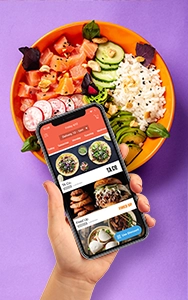
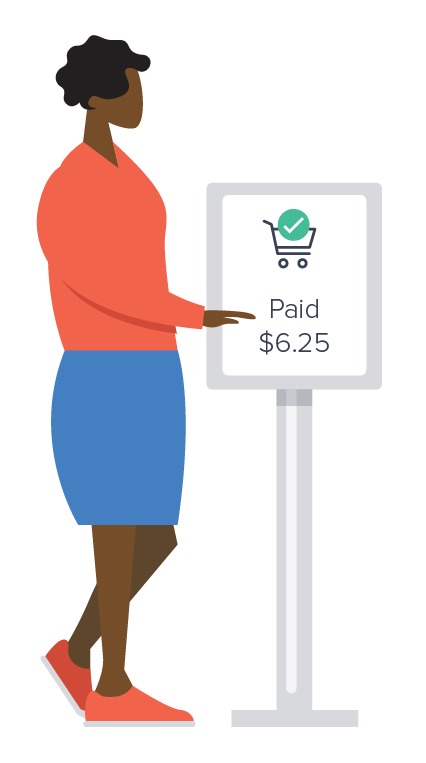
Fooda Subsidies are seamless to manage, with the flexibility to add or remove members, allocate funds, and change subsidy amounts all within the app. You can even use Fooda Card for an even more flexible subsidy program, with employees having the option to use their meal benefits during work trips or late-night work sessions.
There’s no going back and forth with multiple departments and no reimbursement headache. And everything is tracked with Fooda’s proprietary technology, which simplifies and centralizes billing.
Fooda also lets you serve fully subsidized meals for special events and meetings with Corporate Catering Services that can scale with your needs. So whether you need individual boxed meal catering for a lunch-and-learn session or traditional drop catering for a celebration, you can find a range of catering solutions that fit the occasion.
Need a flexible employee lunch subsidy solution for your office? Contact Fooda today.

According to the latest Fooda Price Index, the average cost of lunch in the workplace is $13.90 as of September 2026.
A workplace food program can cost anywhere between $3 and $50 per employee per meal. The actual cost may vary depending on factors like program type, location, cuisine, and subsidy model. For Fooda clients that subsidize employee meals, costs range from $3,184 per month for partially subsidized popups and $4,040 per month for fully subsidized office catering delivery.
Based on data from 800+ Fooda accounts with a subsidy, companies pay an average of $6.50 per meal at Popup and $13.50 to $15 per meal at Delivery.
Meals from Fooda typically cost between $8 and $12 per meal depending on the type of service. Costs are calculated from regular menu prices of participating local restaurants, reflecting real market conditions. Fooda doesn’t add a markup to food prices, ensuring fair and transparent pricing.

Jacqueline Zote is a freelance writer and editor specializing in stories that involve food. When she’s not writing, she loves cooking up experiments in the kitchen and going on culinary adventures to explore new restaurants and uncover hidden gastronomic gems.