.jpg)
These days, Los Angeles companies know that attracting talent takes more than a strong salary and a solid benefits package. In a city where people have plenty of reasons to rethink their commute, the everyday workplace experience matters more than ever.
For employers, that means paying closer attention to the small moments that shape an employee's day. The strategies that make the biggest difference aren't always the most extravagant or attention-grabbing, but they're often the ones that make coming into the office feel easier and more worthwhile.
That's part of the reason workplace food programs are getting a fresh look. What used to be an occasional perk is becoming a practical way to cultivate a better employee experience that creates an immediate positive change.
In Los Angeles, where competition for talent is high and labor costs continue to rise, workplace food programs are becoming a smart business investment.
As employee expectations evolve and office attendance patterns continue to shift, employers are looking for solutions that support both the workplace experience and broader business goals.
That's why more companies are taking a closer look at workplace food programs. When designed thoughtfully, they can deliver value that extends well beyond the lunch hour.
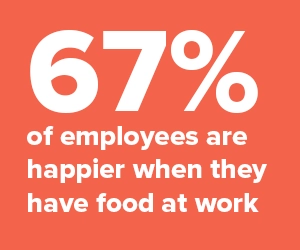
In a competitive hiring market like Los Angeles, employees are considering more than salary when choosing where to work, and employers are looking for ways to differentiate themselves beyond traditional benefits. Unlike perks that employees may use occasionally, workplace food programs provide consistent, immediately visible value that demonstrates an investment in employees' daily experience and wellbeing.
Additionally, according to CommercialCafe, LA employees face the third longest commute times in the US. This means that office days often come with more friction. Employees have to get up earlier, deal with crowded public transit or stressful rush hour traffic. Add in the cost of parking and gas, and the commute begins to feel like a heavy burden.
This tension can be eased by workplace food programs. Employees no longer have to pack lunches from home or leave the office to find meals. Instead, they get readily available, affordable, and delicious food. It’s a convenience that can’t be replicated at home, and it offsets the inconvenience of their daily commute.
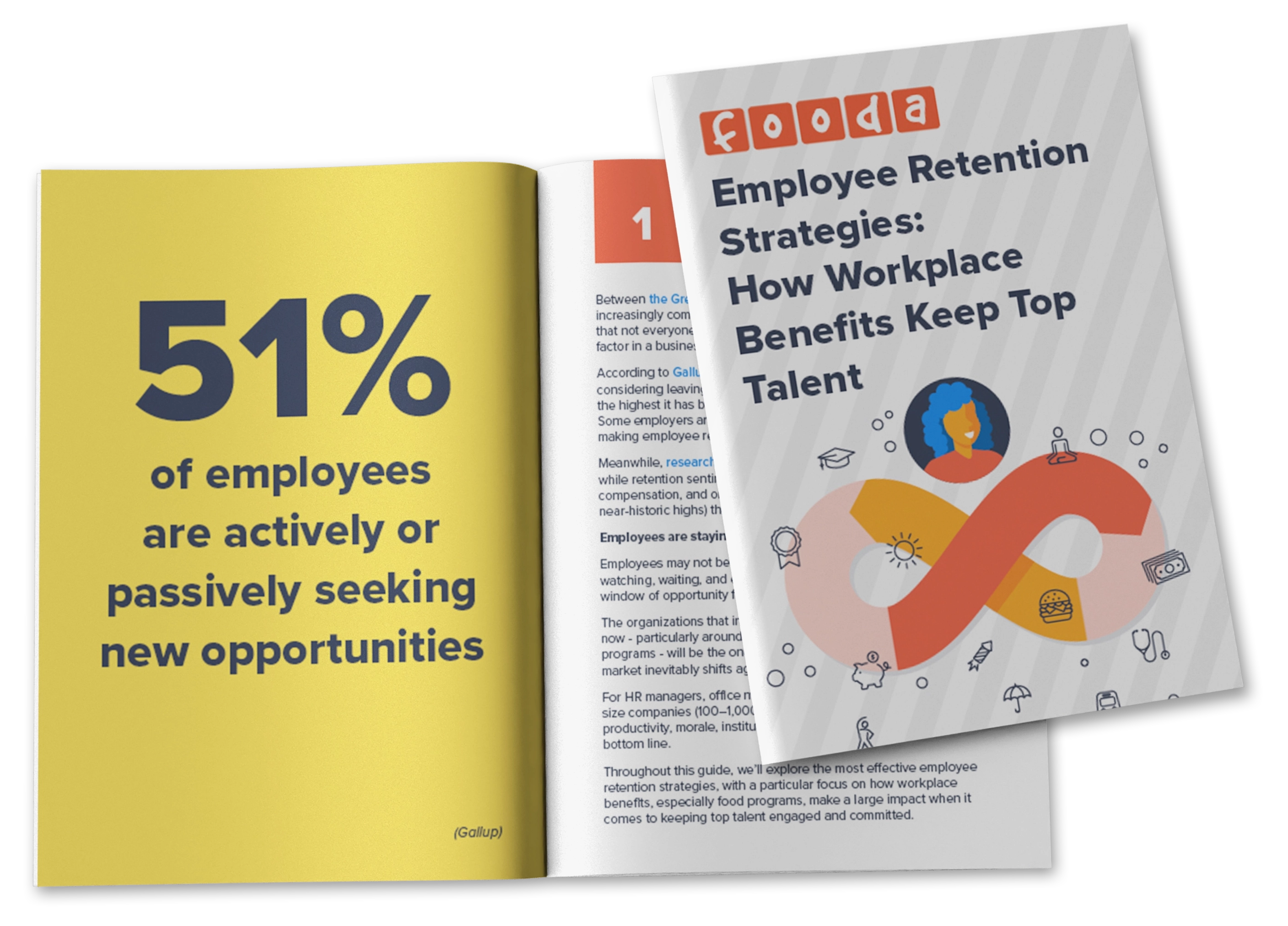
Workplace food programs can support both talent acquisition and employee retention efforts. By offering food options that align with employee expectations, companies can create a workplace experience that helps attract candidates and encourages current employees to stay.
.jpg)
Workplace food programs can help employers improve productivity by reducing the time their teams spend leaving the office to pick up lunch. When food is available on-site, teams can coordinate schedules more easily, avoid interruptions during the day, and maintain flow between meetings and work sessions.
Reducing off-site lunch runs also supports greater workplace efficiency. Employees spend less time figuring out where to go or waiting in line at nearby restaurants. They don’t have to choose between rushing through their meals or returning from breaks late. Teams can take real breaks, recharge, and get back to work without losing focus.
For organizations continuing to encourage in-person collaboration, reliable meal options can simplify daily operations and create a more seamless workplace experience.
.jpg)
With office attendance shifting from day to day, planning meals for the workplace isn’t always predictable. When headcounts fluctuate, it becomes harder to match food orders with actual demand. That often leads to over-ordering on some days and under-ordering on others. Both scenarios create unnecessary financial and environmental waste.
Workplace food programs help create more predictability by making it easier to align meal offerings with actual demand. Many workplace food programs are designed to be scalable. They can be easily adjusted based on attendance patterns, making it easier to reliably meet demand and keeping costs predictable. If you choose a workplace food partner with participation monitoring built in, ordering becomes more accurate over time, all with minimal operational burden on administrators.
Creating a workplace food program that works for employees in Los Angeles takes more than offering a meal. Employers need solutions that reflect the city's unique food culture, support evolving work models, and make office days more convenient for employees.
Los Angeles employees are surrounded by one of the country's most vibrant food scenes, where easy access to diverse cuisines is part of everyday life.Those expectations don't disappear when employees head into the office, and meeting them isn't always easy.
Fooda’s survey of 100+ workplace leaders found that 87% value variety in their food programs, and 83% feel it’s important to support local restaurants. That’s a significant majority consensus, and ignoring it could work against you, making employees feel like their preferences are being ignored.
Traditional programs tend to rely on repetitive menus and the same vendors week after week, making meals feel less appealing and easier to ignore. This is especially true when they’re restricted to food choices they could find anywhere in the country. Over time, employees can lose interest when lunch options feel predictable. When you’re surrounded by one of the best culinary landscapes in the country, generic food is bound to disappoint.
Rotating menus help keep workplace meals fresh and give employees something new to look forward to throughout the week. A mix of cuisines and dining formats also makes it easier to accommodate different tastes and dietary preferences without adding complexity.
Partnering with local restaurants brings the flavors employees already know and love into the workplace. In a city like Los Angeles, local restaurant partnerships help deliver the variety and quality people expect while creating a dining experience that feels connected to the community.
.jpg)
Many Los Angeles employers are supporting teams with different schedules, office routines, and dining preferences, making it harder to find a single approach that works for everyone. What's convenient for a hospital employee finishing a long shift may look very different from what works for a production crew.
Traditional catering was built for a workplace with predictable schedules and consistent attendance. Planning lunch for a fixed headcount days in advance no longer reflects how most workplaces approach meals today. Hybrid work has changed that.
Fluctuating attendance makes it difficult to order the right amount of food without overordering or running short. When schedules shift unexpectedly, even well-planned orders can create unnecessary complexity.
Managing workplace food shouldn't add another responsibility for already busy office teams. Coordinating headcounts, collecting dietary preferences, adjusting orders, and communicating with vendors can quickly become time-consuming.
Modern workplaces need food programs that can adapt as attendance changes, scale up or down as needed, and provide more flexibility without adding administrative burden.

For many Los Angeles employees, grabbing lunch isn't always as simple as walking a few blocks. The city's size, heavy traffic, and spread-out neighborhoods can turn a quick lunch break into another hassle during the workday. After long commutes, most people don't want to spend more time traveling across town just to find something to eat.
Bringing food directly into the workplace helps eliminate that friction. Instead of navigating traffic, waiting in long lines, or rushing back to the office, employees can enjoy quality meals without leaving the building.
That means less time figuring out where to eat and more time actually taking a break before getting back to work. When lunch feels easy and accessible, in-office days become more convenient and worthwhile.
Finding the right workplace food program in Los Angeles means meeting diverse workplace needs. Office attendance can vary throughout the week, and different teams often have different schedules, routines, and dining preferences.
That's why many Los Angeles companies are investing in workplace food programs that offer more reliability while bringing the city's diverse cuisines directly into the office.
With a network of 4500+ local restaurants and multiple workplace dining solutions, Fooda helps companies create a program that fits their workplace needs while giving employees access to meals they genuinely enjoy.
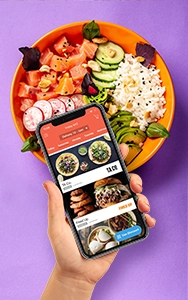
Office Lunch Delivery works especially well for teams with fluctuating attendance. Employees place individual orders from a rotating selection of local restaurants, and all meals arrive together in a single delivery. Since companies only pay for meals that are actually ordered, it's an easy way to offer more choice while keeping food spend aligned with demand.
Corporate Dining Popups create a different experience on busier office days. A rotating lineup of local restaurants comes directly to the workplace, giving employees access to fresh meals and new restaurant options throughout the week. Popups make it easy for teams to gather over lunch without leaving the office.
Corporate Event Catering supports everything from all-hands meetings and team celebrations to client events and executive lunches. Companies can choose from a wide network of local restaurant partners while Fooda handles ordering, logistics, and delivery.
For organizations with larger onsite teams, Orange by Fooda offers a more permanent dining option while maintaining the flexibility today's workplaces need. Fooda cafés feature local restaurant partners and rotating menus that keep the experience fresh and relevant over time.
Whether the goal is to improve the in-office experience, make meal planning easier, or offer food options that employees genuinely enjoy, Fooda helps Los Angeles employers build a program that works for their teams.
Ready to create a workplace food program that supports your retention initiatives? Contact Fooda today to learn how flexible workplace dining solutions can help improve employee retention in your Los Angeles office.
.jpg)
How many employees do you need for a workplace food program?
There’s no universal minimum. The right solution depends more on attendance patterns, office schedules, and employee preferences than on headcount alone. Some programs work best for larger onsite populations, while others are designed specifically for hybrid teams with fluctuating attendance.
How long does it take to launch a workplace food program?
Implementation timelines vary based on the type of program and the needs of each workplace. Factors such as office size, service frequency, and desired dining options all play a role, but many companies can get started much faster than they expect.
Can workplace food programs accommodate dietary restrictions?
Yes. Modern workplace food programs are designed to support a wide range of dietary preferences and needs, including vegetarian, vegan, gluten-free, dairy-free, halal, kosher, and allergy-conscious options.
How do workplace food programs work for hybrid teams?
Flexible workplace dining solutions can adapt to changing attendance patterns throughout the week. Many companies combine different services—such as individual meal ordering on lighter office days and onsite dining experiences when more employees are in the office—to match how their teams actually work.
How can employers measure the success of a workplace food program?
Companies typically evaluate workplace food programs using metrics such as participation rates, employee feedback, office attendance trends, food waste reduction, and overall satisfaction with the in-office experience.