It's a familiar scene: you're having clients over or putting together an office event and you have to think about food. What will you serve? Where will you get it from? How will you serve it? How much can you spend on it?
Office lunch catering services offer an easy way to serve food for your meetings and special occasions. But the gap between a catered lunch that lands and one that generates complaints comes down to three planning decisions: headcount accuracy, dietary coverage, and delivery timing.
This post provides a practical blueprint on how to get office catering services for your workplace. Let's get started.

Catered meals have the flexibility to fit into daily meal programs or serve as an occasional treat. Here’s how you can use workplace lunch catering services for your office.
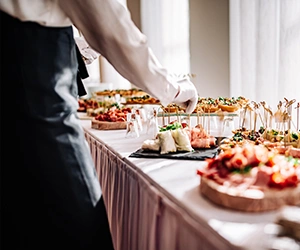
From sales negotiations to boardroom meetings, food is how you show high-end hospitality and keep clients engaged. Business lunch catering providers help you impress and delight your clients with delectable spreads and stunning presentations.
A shared meal also buys you time. Clients who stay to eat give you another half hour of unhurried conversation, which is where the useful, off-agenda questions tend to surface.
Gearing up for a big product launch? Celebrating a milestone? Hosting a retirement party? Whatever the occasion, office catering services offer a stress-free way to keep your guests fed (and the party going).
Handing off the food also protects the person running the event, who is usually the one who can least afford to spend the morning arranging trays.
Catered lunches don’t have to be just for special occasions. Daily office lunch catering can be a part of a larger employee meal benefits program, where you serve recurring meals that contribute to a growing office culture and lift overall morale.
Recurring meals also do something one-off events cannot: they give people from different teams a standing reason to be in the same room at the same time.
Once you’ve decided on the perfect occasion to serve workplace lunch catering, you need to figure out how you want to serve it. The right choice will depend on factors like event type and budget.
Let’s look at some of the most common formats:
Cost will be a major factor that helps you decide the best office lunch catering services to get for your workplace. Typically, the cost ranges from $15 to $30 per person for drop-off and $30 to $50 for full-service.
Those ranges sit on a moving baseline. Restaurant menu pricing is the closest public benchmark for catering rates, and food away from home prices rose 3.4% over the 12 months ending June 2026 according to the Bureau of Labor Statistics.
The exact rate depends on various factors like:
Companies may also negotiate deals for recurring meal deliveries, which further brings down the cost of providing catered lunches. This gives you all the more reason to consider having daily office lunch catering baked into a larger workplace food program.
Office lunch catering can carry your event, and it can also create three predictable problems. Each one has a specific cause, which is what makes it preventable.
While it's not easy to get everything right with office lunch catering, good planning solves most of the problems above.
How much can you afford to spend on catering for this specific event or for daily office lunch catering? Setting a budget is one of the first considerations because it provides you with a baseline for other decisions.
Decide on your per-person budget, which will typically start from $15. Additionally, you can put spend caps at the department or team level. Make sure to provide some breathing room to account for price differences between restaurants.
Now comes the hard (yet most exciting) part. It’s time to plan your catering menu. While it can be difficult to make everyone happy with the food choice every single time, you can get pretty close when you offer a well-thought out variety of options.
You can't plan around every last-minute no-show, but an RSVP count gets you close enough to matter. Say you budget for 50 attendees and 25 turn up. Had you collected RSVPs and seen 30 confirmations, you would have ordered around 40% less food, cutting both the food waste and the spend attached to it.
If you're not doing individual boxed meal catering, use the restaurant's serving size estimates to decide how much to order. A 25-piece empanada platter that feeds 10 to 12 people means two platters for a team of 20, while a full tray of chicken that feeds 18 to 20 covers that same group with a single tray.
Ask for these figures before you order, because platter and tray sizes vary widely between restaurants.
Fooda’s corporate event catering service lets you tap into a vast network of catering providers and diverse formats to meet your exact needs.
Fooda has an expansive network of 4,500+ restaurants that serve a variety of cuisines to meet your team’s tastes. This gives you the freedom to plan catering menus that accommodate unique dietary needs. It also means you can easily rotate between themes and cuisines to add novelty to the employee dining experience.
This variety is what will make your employees go from “not sandwiches again” to anticipating what your next event has in store.
Fooda doesn't limit you to a single food solution. The catering service can be combined with other Fooda solutions, so you can build a program tailored to your company's exact specifications.
For example, you could use the Office Lunch Delivery service for recurring daily meals, while the occasional Popup Restaurant brings in some variety every week. Individual boxed meal catering keeps attention on the discussion during team meetings, while buffet-style catered meals work as a treat to celebrate special events.
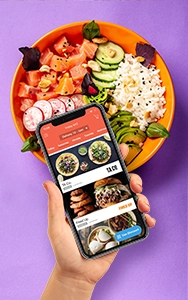
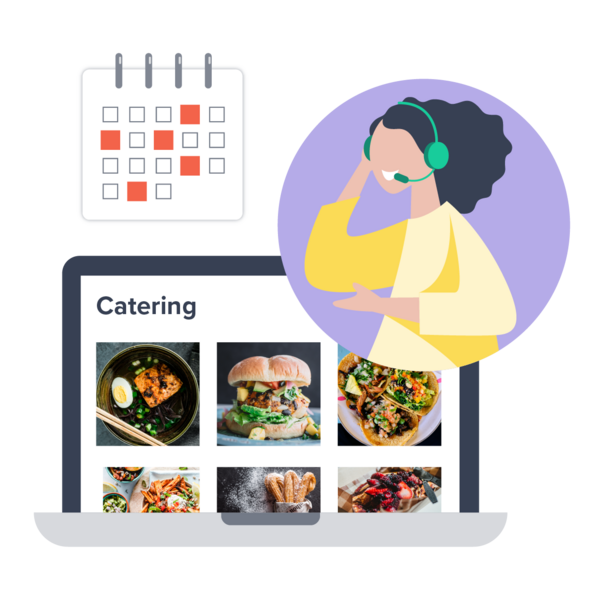
Ordering catering with Fooda is easy, as you have online tools to browse menus and check prices without the endless back-and-forth with a phone rep. You can filter options by budget, cuisine, and even dietary restrictions, so it takes just a few clicks to find meals that accommodate everyone's preferences.
The Fooda team closely manages every catering order, ensuring that your food arrives on time. A dedicated catering concierge oversees the entire ordering, scheduling, and tracking process to make sure your event goes off without delays and disruptions. Fooda maintains a 99% on-time track record as a result.
Ready to plan your next catered event or build a workplace food program with Fooda? Talk to us today.

What is the best type of office lunch catering for a meeting?
Individual boxed meal catering is the best fit for meetings. Meetings need minimal disruption and sustained attention, and boxed meals deliver both because there is no serving line, no shared platters to pass, and almost no cleanup. Each box can also be labeled for allergens and dietary needs, so nobody has to leave the room to sort out their meal.
How far in advance should you order office lunch catering?
Order drop-off and boxed meal catering at least 24 to 48 hours ahead, and give full-service catering one to two weeks. Large events, custom menus, and popular restaurants need the longer lead time. Booking early also widens your restaurant options, since the most requested kitchens fill their noon delivery windows first.
How much food should you order per person for office catering?
Plan on one entree plus one to two sides per person for a full lunch, and use the restaurant's own serving estimates rather than guessing. A platter listed for 10 to 12 people covers roughly that many, so a team of 20 needs two. Order against confirmed RSVPs with a small buffer instead of your invite list, which is where most over-ordering starts.
What is the difference between office lunch catering and office lunch delivery?
Office lunch catering serves a group from a shared order, typically one menu chosen by an organizer for an event or meeting. Office lunch delivery lets each employee order their own meal, consolidated into a single drop-off. Catering fits occasions with a host and a headcount, while delivery fits recurring daily programs where individual choice matters more than presentation.
What should you look for in the best office lunch catering service?
Evaluate five things: restaurant and cuisine variety deep enough to rotate menus, documented allergen and dietary labeling, on-time delivery performance you can verify, online ordering with visible pricing, and a named contact who owns the order. Ask for on-time rates specifically, since a late arrival is the failure that no amount of menu quality compensates for.