The SaaS industry is known for notoriously high compensation across various roles. While the national annual income stood below $70,000 in 2024, one study found that the average pay for SaaS jobs in 2026 typically ranges from $185,194 to $239,826. So in a bid between different employers, it’s easy to assume that whoever can pay the highest wins.
But people working in SaaS aren’t just looking at salary to assess their job opportunities. They’re considering flexibility and work-life balance, comparing non-salary perks, and weighing the overall benefits of working with a specific employer vs. another.
The winning employers are the ones who know what to negotiate besides salary. They know how to design total rewards SaaS employees love and use those perks as a negotiation lever.
In this post, we guide you through the process of employee benefits negotiation for SaaS companies. We provide ideas for employee perks that attract talent and how to win at non-salary benefits negotiation, with a focus on meal benefit programs. Let’s get started.
The 2026 SaaS Industry Compensation Guide by BrainWorks looked at what SaaS workers really prioritize when it comes to their employment decisions. While competitive base pay continues to be a major draw, employees are also considering other factors that add to the whole experience of working with a specific employer.
Here’s a look at the main employee perks that attract talent and retain employees in SaaS:
Workers are essentially asking, “Does a tech job offer perks that will improve my life as a whole?”
These priorities reflect the shifting values toward work-life balance, which organizations can support through various perks and benefits. For example, easy access to balanced meals and nutritious snacks saves employees the trouble of having to do meal prep and pack their own lunch.
They also align with broader workforce trends that show workers valuing balance the most after compensation. According to LinkedIn, nearly half of candidates consider organizational support for balanced work and personal life when considering a new job.

Food can be the perfect negotiation lever to complement your compensation package, as it’s one of the few things that directly address the biggest challenges for modern SaaS workers.
These are workers who have a deep desire for flexibility as they struggle in high-intensity environments that fuel burnout. And with the added friction of return-to-office mandates, they need something tangible and instant to visualize how your company addresses their problems.
Food perks let you do just that, giving candidates a mental picture of buzzing food halls and tempting meals that immediately solve several key personal and workplace challenges.
It also helps that daily food programs cost a fraction of the salary gap you need to close. With the lower end of SaaS compensation averaging at $185,194 (as noted earlier), employers will need to go much higher to outbid competing employers. Meanwhile, The Fooda Price Index estimates the current average price of lunch at $14.73.
So even a fully subsidized lunch program for 40 employees would cost you just over $168,000 for the whole year. That’s still significantly less than the lower end of the industry’s average salary.
Here’s how to use food to design total rewards SaaS candidates love, so you have better leverage in your employee benefits negotiation.
SaaS talent values flexibility above all else. According to BrainWorks, the top workplace priorities for employees were remote or hybrid work models (54%) and flexible hours (51%).
So your food perks need to adapt to the diverse needs of a hybrid SaaS workforce. If your meal program only benefits employees who live near a physical headquarters, you will alienate top-tier remote engineers and sales reps. Let’s look at a few ideas to help you design food perks for your hybrid team:
Developers, software architects, and product managers constantly carry immense cognitive loads. Positioning your food program around performance nutrition and mental stamina appeals heavily to modern candidates. Here are a few ideas:
Standard pizza boxes and low-effort treats don’t exactly make for the most memorable celebratory meal. Incentives must feel intentional, personalized, and substantial enough to drive long-term motivation.
This involves designing food-based rewards to recognize both individual wins and team or organization-wide achievements, whether it’s a major software release or closing an enterprise account.
As more organizations encourage onsite work, mandatory in-office days don’t give you the negotiating power to draw in SaaS candidates who value flexible hours and hybrid setups. Meanwhile, return-to-office (RTO) mandates also alienate existing SaaS talent that prefers the flexibility of remote or hybrid models.
Food remains the most effective, friction-free way to incentivize employees to visit physical offices voluntarily. Here are a few ideas to build culture for your hybrid SaaS team and use it as a negotiating lever:
Fooda offers a wide range of workplace food solutions that you can incorporate into your total rewards program. This gives you the leverage needed to attract high-quality SaaS talent with a tech job that offers perks beyond competitive base pay.
Here are some of the key Fooda features that will serve as a lever in your employee benefits negotiation.
In a high-demand talent market like SaaS, free cafeteria food is no longer the draw it once was, especially if it relies on the same old tired menu rotation. With solutions like Fooda Popup and Orange by Fooda, you can bring in top-rated local restaurants to serve restaurant-quality meals on demand right in your office.
This means employees get to enjoy fresh and nutritious meals onsite without having to leave the campus, giving them more time to focus on deep work. And with the option to rotate between different restaurants and menus, it’s easier than ever to provide meals that appeal to the diverse tastes of your employees.
So while a resident salad station serves a consistent selection of healthy salads, for example, employees will also get to choose from a rotation of exciting cuisines, such as Japanese, Indian, Lebanese, and more.
Software developers and architects don’t always have the time to leave their desks in the middle of intensive coding sessions. For SaaS candidates who thrive under this work style, convenience and time-savings are the biggest priority. So being able to get lunch delivered to them can be a major perk during negotiations.
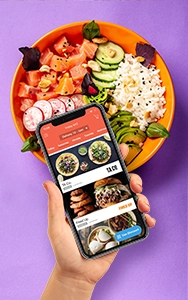
Fooda’s Office Lunch Delivery service turns lunchtime convenience into a workplace employee perk that attracts talent. Each employee chooses their own meal from a featured selection of local restaurants in the Fooda app. Orders arrive in individual boxes, so your team can conveniently eat them at their own desks when they’re ready.
Not to mention the added benefit of daily scalability that helps you cut costs. Instead of having to predict demand based on anticipated attendance, orders are placed based on actual attendance.
This gives you the perfect coverage to feed your team even on light attendance days when you’re not running a full-service cafeteria operation. Meanwhile, Corporate Event Catering services let you serve catered meals to celebrate special occasions or keep your team fueled through long meetings.
Any employer can offer free food at work. But you won’t necessarily attract the best SaaS talent if the only free snacks you have to offer are stale breakroom coffee, high-calorie potato chips, and sugary sodas.
Fooda Pantry strengthens your snack offering with micromarkets, fresh fruit, smart vending machines, and premium beverages. So you can win over SaaS candidates with the prospect of gourmet barista-quality coffee, enriched water, and healthy snacks to fuel their deep work sessions.
Fooda makes it easy to personalize your employee benefits negotiation with customized meal stipends that fit the unique needs of each candidate. With in-app subsidy management tools, you can effortlessly customize the allowances for employee subsidized meals at the team or individual level.
For example, while a hybrid worker from the engineering team gets $15 for the three days they work onsite, fully in-office sales teams may get $8 per day for the entire week. Or you could provide additional meal bonuses to reward top performers.
Products like the Fooda Card further let you extend your meal benefits to hybrid and remote workers outside of the office. This allows employees to pay for their meals at select restaurants and eateries even on the days they work from home. And you still get full control over where they eat, how much they get to spend, and when they get to use the card.
Ready to turn food into an instant negotiation lever? Get in touch with Fooda.
The five common types of employee benefits are health insurance, retirement savings plans, paid time off, subsidized meals, and flexible work arrangements. The first three are expected in most SaaS offers, which is why the last two so often decide close calls.
Besides compensation, SaaS candidates look at the company's overall benefits and perks to see how it can better support work-life balance. They value subsidized meals, employee wellness programs, flexible hours, and remote work, because each one changes the shape of the working day rather than the annual number.
Some of the best food benefits for SaaS companies include rotating catered lunches, office lunch delivery services, smart vending solutions, micromarkets, premium beverage stations, and flexible meal benefits cards. Programs that pair an onsite format with a card or stipend travel best across hybrid teams.
Yes, and specificity is what makes it useful. Naming the daily or monthly value, the eligible days, and how remote employees are covered turns a soft perk into a term the candidate can compare directly against a competing offer. Vague language such as "food provided" invites the counteroffer you were trying to prevent.
It depends on the format. In the US, meals an employer provides on premises for its own convenience, along with occasional de minimis snacks and beverages, are often excludable from an employee's income, while cash or cash-equivalent meal allowances are generally treated as taxable wages. Structure matters more than intent here, so confirm the treatment of your specific program with a tax advisor before you put numbers in an offer.
Set the benefit per person rather than per building. A meal card or stipend that works at restaurants near an employee's home delivers the same value as an onsite popup, and matching the allowance to local meal prices keeps the benefit from being worth less to people in expensive metros.
Engineers consistently prioritize protected focus time, flexible or hybrid scheduling, and benefits that remove daily friction, such as food served onsite or delivered to their desk. Perks that give back hours tend to outrank perks that give back money, because hours are what the job spends most of.
Translate it into both an annual figure and a daily experience. Telling a candidate the program is worth roughly $3,900 a year at a $15 daily subsidy, and that they will choose from a rotation of local restaurants, is far more persuasive than listing "catered lunch" among the perks.