With zero physical inventory or location-dependent logistics, SaaS is one of the few industries that can function almost entirely remotely. But an isolated team that never gets to meet in person doesn’t always have the closest relationship, which ultimately affects company culture (or lack thereof) and employee retention.
And with more offices reclaiming onsite attendance, SaaS companies feel the pressure to bring remote-capable employees back to the office. Unlike many industries, however, RTO mandates and fully in-office models don’t always work for SaaS. Hybrid setups balance the need for flexibility while creating an opportunity to build SaaS company culture.
At the same time, hybrid workplace culture isn’t something that automatically appears on its own; it has to be deliberately manufactured. In this guide, we look into the challenges and practical steps to build culture for SaaS in the hybrid workplace.
SurveyMonkey even found that 46% of remote and hybrid workers fear that they’ll miss out on building relationships with coworkers.
So what makes culture such a challenge for hybrid workplaces? Let’s break down some of the biggest ways hybrid setups impact SaaS company culture:
Investing in communication tools and project management software may streamline workflows for hybrid teams, but it doesn’t fix culture.
Your RTO mandate may bring people back to the office and technically boost office attendance. But mandates don’t guarantee a thriving workplace culture.
SaaS companies need to focus on building a workplace experience with perks that create actual pull. So you get workers who are actually excited about coming into work and engaging in shared experiences with their colleagues. And food gives you the best leverage to do just that with minimal complexity.
In fact, 83% of workplace leaders in Fooda's 2026 Workplace Lunch Report say food influences workplace culture. Here’s how an office lunch program for hybrid teams can build culture:
It’s hard to build culture when half of your employees aren’t even in the office. Food perks like free lunch and meal subsidy plans can give your remote-capable employees a better reason to work onsite.
When you have lunch covered, it addresses two major concerns for hybrid employees:
So your lunch program can draw people into the office by making the commute to work more worthwhile. And the time savings could contribute to a better work-life balance. It’s no wonder 80% of employees in our What’s Happening in the Workplace Now? survey feel more enthusiastic about work when the company provides lunch.
As noted in our Maximizing Workplace Attendance guide, one health insurance provider managed to increase onsite attendance by 3x by implementing a daily food program that sees a 90% participation rate.
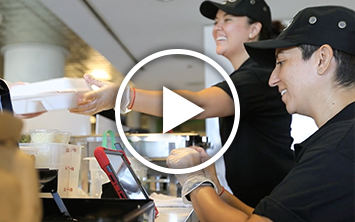
A Popup Restaurant program with a comprehensive snacking solution instantly created a workplace experience that welcomed their returning workforce. The company provided a diverse selection of high-quality food from local restaurants, which made the commute to work much more appealing.

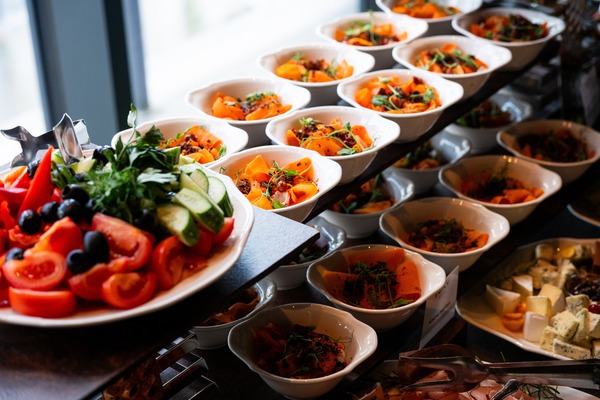
Food gives you the perfect opportunity to design shared experiences that encourage team bonding. Casual shared meals break down silos and turn in-office days into organic team-building experiences rather than forced compliance.
Conversations flow more freely when people get to talk about an upcoming Cubs game over lunch vs. ongoing projects and upcoming reports during a team meeting. That’s exactly why you should encourage employees to bond over lunch with scheduled breaks and shared meals.
Hybrid work perks like free meals directly influence the daily workplace experience for your employees. When they can conveniently grab a healthy snack or have a fulfilling lunch free of cost, it reduces friction for hybrid SaaS teams. For example, engineers and developers can grab a quick and healthy snack to power through their deep work time.
So food perks are the easiest, most visible way to show employees that you appreciate them and value their time on a daily basis. And when employees feel valued, it improves morale and productivity.
Now the challenge lies in building the actual program. Anyone could get a catering service to provide lunch for a special event or order delivery from a local restaurant. But how do you intentionally design your workplace food program to foster community and culture, especially in the context of hybrid SaaS setups?
Let’s walk you through the steps and best practices to build an office lunch program for hybrid teams.
Headcounts fluctuate daily for hybrid teams. One day you have your entire development team working from home; the next you have everyone working onsite because there’s something that needs in-person collaboration.
So your workplace food program needs to dynamically scale with these fluctuations. Build a program that relies on flexible food solutions like popup restaurants and lunch delivery services. With these solutions, employees order their own meals without you having to anticipate attendance.
This allows you to scale daily food prep based on actual attendance, making sure that you don’t end up with excess food or hungry employees.
When you’re relying on the same predictable menu rotation, food becomes routine and loses its novelty. Employees don’t have much to look forward to when they come into work, turning onsite days into an obligation rather than an exciting opportunity.
Rotating menus between different cuisines and local restaurants helps you keep things fresh and exciting. From trending hotspots to iconic local joints, your meal program ensures that hybrid teams always have new menus to try and cuisines to explore. This could give them enough reason to work onsite even outside of mandatory in-office days.
From the scheduled sit-down meals to the monthly lunch-and-learn sessions, food rituals help you take a more intentional approach to fostering community for your hybrid team. Encourage shared lunch breaks and create dedicated spaces where employees can sit down and enjoy a meal together.
That’s how you encourage casual conversations over a meal and foster organic connection between colleagues.
According to the 2026 Workplace Lunch Report, workplace leaders are actively building community and culture around food:
Anchor days give you the perfect opportunity to coordinate shared dining events where your entire team can socialize and connect over food. Whether it’s a Tuesday or a Friday, this is one of the few times when your entire workforce gets to be in the office at the same time.
Make an event out of it with special office catering for hybrid teams. Whether employees are required by policy or encouraged to be onsite for anchor days, catered lunches can drive high turnouts.
Fooda brings you a vast range of food solutions that can be tailored to the specific needs of your hybrid team. Whether you have hybrid split-week schedules where each team gets assigned in-office days, or everyone gets to choose when they come into work, you can build a scalable food program to keep your SaaS team fed.
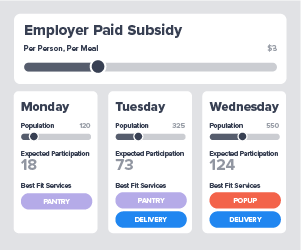
Fooda lets you combine multiple food solutions to build the perfect office lunch program for hybrid teams. This allows you to scale up or down your program based on actual attendance, even if it fluctuates daily. So you could do:
Fooda’s workplace food solutions are powered by a vast network of top-rated local restaurants. With smart scheduling, you get to rotate between these restaurants, whether you’re getting lunch delivered or arranging a Popup.
So variety is automatically baked into your program, letting you effortlessly offer menus that draw hybrid employees into the office.
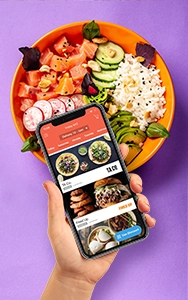
With the Fooda app, employees don’t even have to leave their desks to see what’s on the menu. They get to browse a virtual food hall with a selection of items from the day’s featured restaurants. And once they find something they like, they can place their lunch delivery orders directly within the app.
Mobile Order Ahead features make it easy for employees to preorder their meals from the day’s Popup service. So they can place their orders even when they’re in the middle of a task. All they have to do is pick up the food when it’s ready without having to wait in line.
Fooda makes it easy to build meal benefits that celebrate your hybrid workforce regardless of your team setup. You can build subsidized meal programs that are tailored to the unique needs and schedules of your hybrid team.
Subsidies are automatically applied during checkout, with the option to have employees pay the balance.
You can even customize the meal subsidy amount for each employee and team based on specific eligibility criteria. For instance, the engineering team may have a $20 daily subsidy for three onsite days, while the sales team that’s fully onsite has a $10 daily subsidy.
Fooda also provides greater flexibility with the Fooda Card: a meal benefit card that you can effortlessly customize to better accommodate the needs of your remote and hybrid teams. So your meal benefit program can extend beyond the office premises, as employees get to use the card to pay for meals from pre-approved restaurants and eateries.
You can configure the card to specifically align with your program, whether that means setting:
Ready for a flexible food program that seamlessly scales with your hybrid team? Talk to Fooda today.
What is a hybrid work culture?
A hybrid work culture is the set of norms, rituals, and shared experiences that hold a team together when employees split their week between home and the office. It differs from traditional office culture in one key way: proximity no longer creates connection by default, so the in-office days have to be designed around collaboration and social time.
What are anchor days in a hybrid schedule?
Anchor days are designated days when an entire team or company is expected onsite at the same time. Most hybrid companies choose one to three per week, usually mid-week, and reserve them for work that benefits from being in the same room: sprint planning, onboarding, design reviews, and cross-functional problem solving.
Does providing free lunch get employees to come into the office?
Food influences attendance when it cancels out a real cost of commuting. Covering lunch offsets a daily expense and removes the time employees spend packing or sourcing a meal. It works best alongside a reason to be onsite, like an anchor day or a team planning session, rather than as the only draw.
How do you build culture on a hybrid SaaS team?
Concentrate culture-building on the days people are already together instead of spreading it thin across the week. That means reserving onsite time for collaborative work, creating recurring rituals like shared lunch breaks or lunch-and-learns, and building in unstructured time where conversations happen without an agenda.
What perks work best for hybrid employees?
Recurring perks outperform one-off events because employees feel them every week. Meal programs, commuter support, and flexible scheduling all show up repeatedly in an employee's routine, while an annual offsite or a holiday party registers once. Food perks also carry an advantage in hybrid settings: they give people a shared activity, not just a benefit they use alone.
How do you run an office lunch program when attendance changes daily?
Choose models where employees order individually rather than models that require a fixed headcount. Popup restaurants and coordinated lunch delivery scale to whoever shows up that day, since each person places their own order. Programs built around pre-counted catering trays tend to produce waste on light days and shortages on heavy ones.
How much does a hybrid office lunch program cost?
Cost depends on the subsidy amount per meal and actual participation, not total headcount. Employers typically set a daily subsidy per employee and let workers cover any balance above it. Subsidy amounts can vary by team, which matters for hybrid companies where some groups are onsite five days a week and others are onsite two.