If you're looking up office lunch ideas, you're probably either an employee tired of the same underwhelming options, or a manager trying to make food at the office something people look forward to. Either way, the answer is usually less about the food itself and more about the system behind it.
When lunch works well:
When lunch doesn't work, it turns into a daily friction point that quietly drains time and energy.
So before you start browsing menus, it's worth asking a more useful question: what should lunch look like here on a regular basis?
It's tempting to just pick what's easy, fast, and familiar. But most lunch setups that feel "fine" on the surface are falling short structurally. Too much food sitting out that nobody asked for, not enough of what people want, and half the team leaving to order something else anyway.
Whether you're planning daily meals or a weekly office catering order, a successful program comes down to three things: the occasion, the format, and the audience.
.jpg)
IFIC's 2025 data shows that price, health, and convenience are all deciding factors when people choose food. That tension is felt every time someone has to source lunch on their own or you try to pick one meal for a group of 30 people with completely different preferences.
The offices that consistently get this right have one thing in common: they stop deciding everything last minute. They build a structure first and let the food fit inside it, which makes weekly decisions faster and removes the guesswork that burns out whoever is managing the program.
Before you pick a format, it helps to get clear on what lunch is supposed to do for your workplace. The answer shapes everything that follows.
Lunch needs to feel like a genuine upgrade over what employees would do at home. And right now, the bar is high.
Owl Labs' 2025 hybrid work report found employees spend about $18 on lunch every time they come in. If showing up to work means paying more for a worse experience than eating at home, that math doesn't work in your favor.
If you want to get employees back in the office, what tends to hold up is having more than one option, rotating a selection of local restaurants, and offering subsidized lunches on your busiest anchor days.

You can feel it when lunch disrupts the flow of the day: people trickling back late, someone trying to work while eating, that sluggish stretch right after where nobody's fully locked in.
The fix is to make lunch easy enough that it requires zero planning from the employee. Quick ordering with delivery, grab-and-go options, and clear labeling for dietary needs all help support a high-performance culture.
If you want to improve productivity, what works best is a consolidated food delivery program that lets employees choose from multiple options that are delivered all at the same time. It helps people engage with their colleagues and promotes cross-departmental collaboration while giving them necessary space to mentally reset for the back half of the day.

You need people to sit down together, and that won't happen if everyone just grabs food and heads back to their desk. You don't have to force it; you just have to remove the reasons people rush off.
A Nectar HR survey found that nearly 70% of employees want deeper, more meaningful connections with their coworkers, and the workplace was named the top source for making new friends ahead of school, neighborhoods, or existing social networks.
Lunch is one of the easiest ways to create space for that. The key is offering enough variety that people want to stay and having a design where breaks feel comfortable.
Lunch only survives as a program if the person managing it can handle the workload that comes with it. If it means chasing vendors, tracking orders in spreadsheets, and putting out fires every Monday - it will eventually get stripped down or dropped.
The setups that last have few moving parts, meals tied to demand, and everything running through one system. That's what a platform like Fooda is built for: ordering, delivery, subsidies, vendor coordination, reporting, and more - all in one place, so the program runs without consuming someone's entire week.
Nailing lunch once is simple. You pick something good, it shows up, people are happy. Doing it every day is where things get tricky, because without variety, people lose interest fast. And without consistency, they stop counting on it.
Here's what works for offices running a daily or near-daily program:
One of the simplest ways to keep employees engaged with lunch is through Popup Restaurants. Instead of committing to a single vendor, you cycle through different restaurants and cuisines without having to think about it.
It reflects how people eat outside of work and there's a real attendance bump when employees know something new is coming in because it creates a small reason to be in the building that day.
.png)
Office lunch delivery is great for workplaces that want individual choice without the chaos of everyone ordering from different apps. Employees pick from a rotating selection of restaurants, and all the orders arrive together in one delivery.
The trick is making it consistent: same days every week, ordering opens at the same time, and the process is clear enough that people can opt in without chasing details. Fooda's delivery model is built around this idea. The structure stays predictable while the food keeps changing, which means employees learn the habit quickly and the daily experience keeps improving.

For larger offices that want a centralized dining experience, the traditional single-vendor cafeteria model is giving way to something better.
Orange by Fooda transforms workplace cafeterias by bringing in top local restaurants on a rotating basis and blending resident restaurants with a lineup of visiting local favorites.
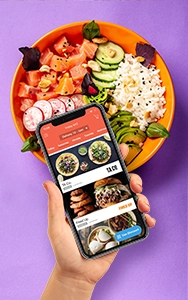
The result is a café that feels fresh and authentically local every day, with chef-crafted meals from diverse cuisines. Employees order through the Fooda app, earn loyalty points on every purchase, and can skip the line with scan-to-pay.
Behind the scenes, Fooda uses ordering data to schedule the right restaurants at the right times, keeping menus aligned with what people want. A dedicated on-site catering manager handles event planning too, so your team gets a full-service dining experience without managing it themselves.
These are the best way to tip the scale for employees who are on the fence about eating at work. Even covering part of the meal, combined with flexible ordering, can noticeably improve daily participation because it removes cost as a barrier.

You still need to fill the gap on quieter days when a full lunch program would be overkill. Pre-made sandwiches, snacks, drinks, and quick bites that people can grab between meetings.
Fooda's Pantry model is designed for exactly this kind of lighter-touch setup, and it keeps employees fueled on days when a full program doesn't justify the investment.
Meeting lunches have a way of going wrong in very predictable ways.
The food shows up at the wrong time, everyone crowds around one table, or half the room is still sorting out their plate while the other half has started the agenda. Almost every meeting lunch problem comes down to format, not food quality.
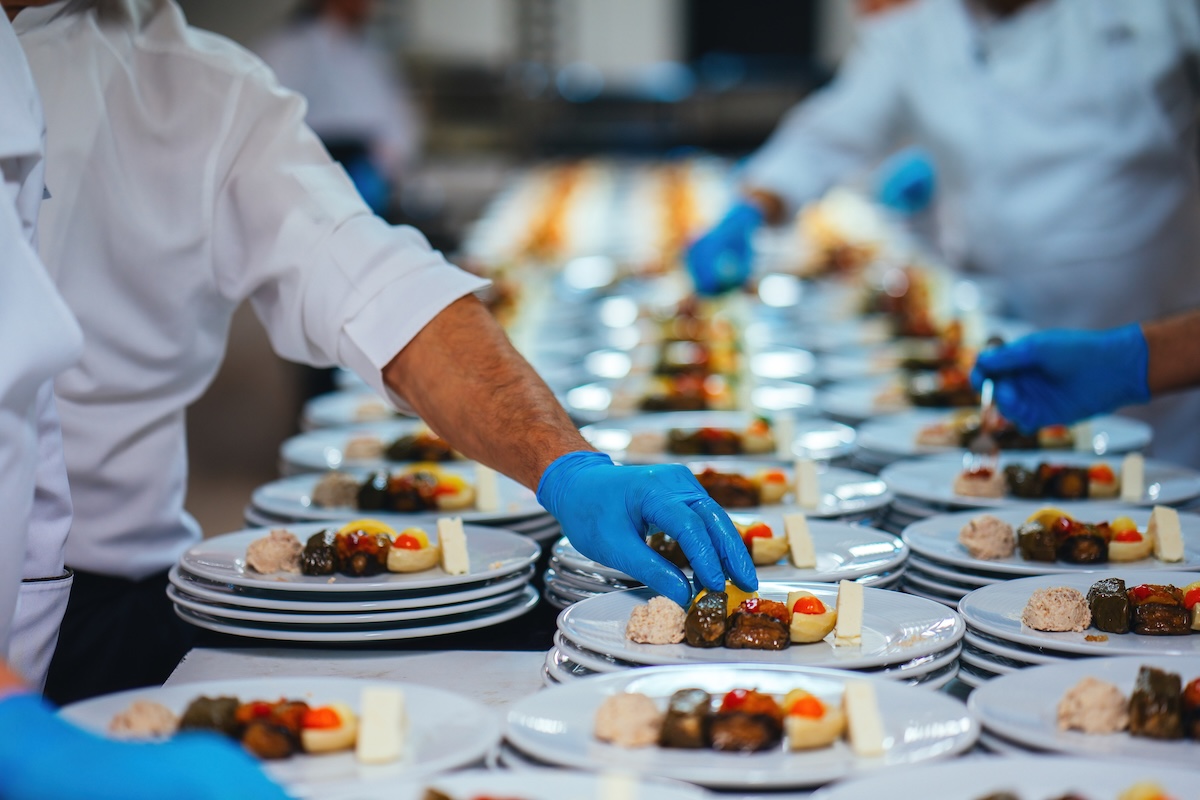
The main thing is keeping everything organized. Shared platters seem like a good idea until people are awkwardly reaching across the table mid-conversation. Individually packaged meals from a catering partner are cleaner: easy to distribute, no confusion about portions, and everyone knows what they're getting.
Stick with things that hold up well. Sandwiches that don't fall apart, bowls that won't leak, and hot meals that still look appealing after sitting for 20 minutes.
You need food that doesn't compete with the conversation. If people are spending time serving themselves or making decisions about what to grab, their attention is split.
Boxed meals are perfect for events like lunch-and-learns because they're self-contained: open, eat, move on. If the session is meant to feel more like an event, bringing in a Popup Restaurant can add energy without creating logistical overhead.
The single biggest mistake is putting all the food in one spot, because it always creates a bottleneck that delays the meeting. Set up multiple pickup points, duplicate the popular items, and choose food that's quick to grab and easy to eat while sitting.
On busy days when people are running from meeting to meeting, even something small and easy to grab ends up getting more use than you'd think.
Snacks or boxed meals go a long way because whether it’s breakfast in the morning or lunch in the afternoon, people are skipping meals more often than they admit.

They don't always need to be big productions to be memorable. The large-scale events tend to blur together anyway. What sticks is something more specific: bringing in a restaurant you know the person you're celebrating loves is a great way to recognize a milestone.
Think of a small group with a set invite list and food that doesn't require standing or moving around. You want the format to be simple enough that the conversation can be the main event. This matters because first-week impressions shape how quickly someone feels like part of the team.
These land best when the food feels authentic rather than decorative. Instead of a generic themed lunch, bring in a restaurant that specializes in the cuisine. A food program partner with a wide network of local restaurants makes this much easier to pull off well.
To show employee appreciation, you need some kind of shift in format for it to feel different from a regular lunch. That could be food made fresh in front of people, several options that feel worth exploring, or something interactive.
Rather than banking everything on one big annual event, spacing smaller moments throughout the year tends to make a stronger impression because people remember frequency more than scale.

At some point, most teams realize they're running an entire system around lunch. If you're still figuring yours out, start by asking these questions:
Once you have a structure in place, you stop starting from scratch every week. The right office lunch ideas start falling into place because the framework is already there to support them.

Most teams have already cycled through different office lunch ideas. Rotated vendors, switched up formats, maybe even upgraded the food quality. But somehow lunch still feels harder to manage than it should.
That usually points to a logistics problem rather than a food problem, which is where Fooda comes in. We take on the parts that tend to break down. Instead of forcing one format to cover every situation, you get a mix of workplace food options that adjust as needed.
Employees order what they want and meals are prepared based on real demand. The whole model is designed to flex with how your office operates and eliminate waste, whether that's a packed Tuesday or a quiet Friday, without asking you to rebuild the program each time something changes.
If you're ready to build a system that takes the strain out of lunch, contact the Fooda team and start designing the program that works for your office.

How much should a company budget per person for office lunch?
It depends on the format and your market, but most companies land between $12 and $20 per person for a daily lunch program. Subsidized models, where the company covers a portion and employees pay the difference, can bring that number down while still making lunch feel worthwhile. The right budget comes down to frequency, headcount, and what you're trying to get out of the program.
What's the best way to measure whether an office lunch program is working?
Start with participation rates, especially broken down by day of the week. If certain days consistently underperform, the format or the menu likely needs adjusting. Employee feedback (even informal) is also valuable. Beyond that, compare on-site attendance on program days versus non-program days to see if lunch is making a measurable difference.