According to projections from the Bureau of Labor Statistics, the tech workforce is expected to grow twice as fast as the rest of the country’s workforce over the next ten years. This is good news for tech offices, pointing to high potential for growth, but this potential has also created an incredibly competitive market.
Because of this, tech offices are looking to gain an edge on their competition, and companies that fail to do so will get left behind. One of the most straightforward ways to do this is by offering simple, immediately visible perks. A recurring catering program can address some of the most common issues tech offices face.
Keep reading to explore the benefits of contract catering in tech offices and learn how to pick the right one for your business.
A competitive talent market, flexible schedules, and the growing prominence of office loneliness can all impact employee retention, satisfaction, engagement, and productivity.
Working with a contract caterer to bring food into your tech office can help address all of these problems by improving the workplace experience, creating a competitive advantage that can help you stand out from the crowd.
According to Robert Half’s Demand for Skilled Talent report, 78% of tech companies are gearing up to increase their permanent headcounts, yet 65% of hiring managers say finding skilled talent is more challenging now than it was a year ago. Even though demand is increasing, the available talent pool still feels tight.
To stand out, tech offices need to offer more than the standard salary and benefits package. Offering perks, like a recurring employee meal program, helps draw new talent in and keep your best around.
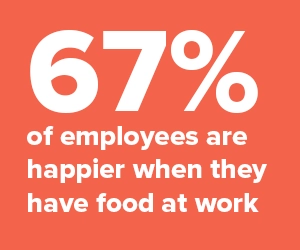
Having food in the office creates valuable convenience, saving employees time and allowing them to relax during their lunch breaks without having to worry about rushing through lines at nearby restaurants, losing money on expensive delivery fees, or spending time outside the office meal prepping. This creates a more pleasant daily experience, building and maintaining employee satisfaction.
Not only does this make employees’ work lives easier, but it also makes them feel seen, appreciated, and cared for. Gallup found that employees are 69% less likely to search for new positions if they feel like their employers care about their well-being. With replacing a single employee costing 50-200% of their annual salary, that’s a significant majority that shouldn’t be ignored, especially in such a tight market where qualified employees have plenty of options.
Your ability to retain employees is just as, if not more, important as your ability to recruit new ones, and offering food in the office can go a long way toward supporting that goal.

According to research from Gallup, 45% of remote-capable employees in the tech sector work hybrid schedules, but attendance is often motivated by mandates more than a genuine desire to work in-person. A Fooda survey from 2025 found that 37% of employees only come in because of company policy.
On-site work creates more opportunities for active collaboration, giving employees the ability to talk and problem-solve freely rather than having to schedule a formal meeting every time they want to chat. It also gives employees more clear boundaries between their work lives and their personal lives, with the two occurring in separate locations and giving them a clean start and end to their work days.
But you’ll only see these benefits at full scale if employees both follow the in-office attendance policy and take full advantage of the opportunities it provides. You need to give employees a reason to take the extra time to commute to work by offering convenience they can’t get at home
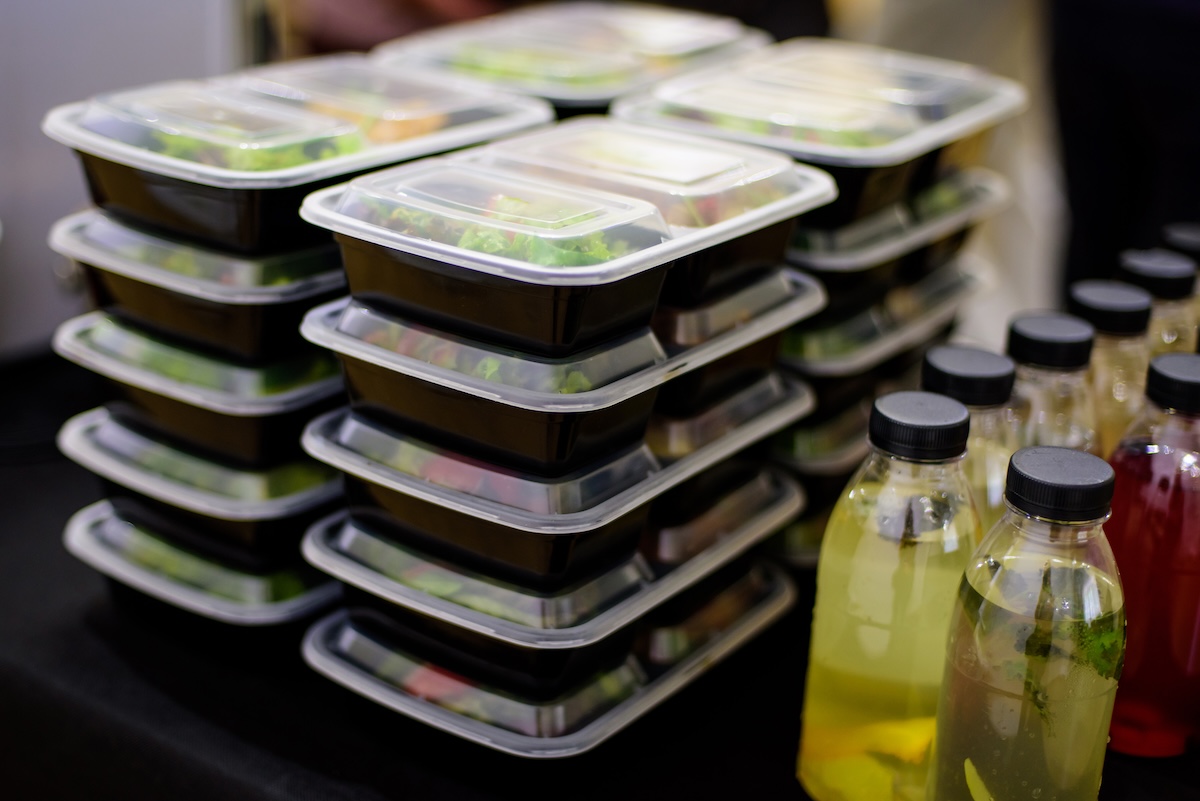
Bringing contract catering into your tech office gives employees access to high-quality food right in the office. They don’t have to make their own lunches, they don’t have to lose time leaving the house, and they don’t have to pay for delivery.
Instead, they can quickly grab a bite to eat without having to worry about budgeting time or planning ahead. It gives them a clean, enjoyable break in their days and allows them to relax and reset before heading back to their desks refreshed and energized.
In a recent study, Gallup found that the use of AI in the workplace has nearly doubled since 2023. While AI can increase productivity, it can also decrease the need for human connection. Rather than wandering over to ask a coworker for help, employees can simply ask their LLMs instead. While this may yield faster results, it also dramatically decreases the amount of time employees spend engaging with each other face-to-face.
In 2023, the U.S. Surgeon General released an advisory stating that over 50% of U.S. adults report feeling lonely. This figure should raise alarm bells in the minds of employers.
Research featured in the Journal of Occupational Medicine found that loneliness in the workplace leads to lower job performance, reduced employee satisfaction, and higher rates of burnout. Ultimately, if your employees aren’t doing well, your company will suffer along with them.
To combat these challenges, you need to make up for the reduced rates of casual interaction in the workplace by encouraging employees to socialize during their lunch breaks.
Whether or not employees take breaks from their desks depends heavily on an employer’s actions. A Fooda survey of over 100 workplace and people leaders found that while 83% believe that food has a moderate to significant impact on workplace culture, 1 in 4 don’t encourage any specific lunch behaviors, and 22% don’t believe that lunch is any more social than it was 2-3 years ago.
By implementing contract catering at your tech company, you show that you want employees to take advantage of their lunch breaks. It becomes something that’s actively encouraged instead of something that’s contractually allowed.
When lunch arrives in the office, regardless of what form it takes, employees are more likely to leave their desks at the same time to retrieve it rather than taking scattered, unstructured breaks. This prompts conversation and encourages them to eat together, giving them a chance to socialize and connect.
Contract catering can have a lot of benefits in a tech office, but only if it’s done well. Haphazard, exclusionary, or stagnant programs won’t see results, and they may end up hurting you rather than working for you. That’s why it’s so important to be thorough when looking at contract catering options.
Even if you organize a delicious, perfectly executed catering spread, it won’t effectively build morale if anyone is left without something to eat. Whether they follow kosher, halal, vegan, or paleo diets, not having any suitable food options can make employees feel left out and overlooked, and other employees are likely to get upset on their behalf. To avoid this, select a catering partner that can responsibly handle dietary restrictions and preferences.
Additionally, many of the country’s major tech hubs are located in areas with highly health-conscious populations, including Silicon Valley, Austin, Seattle, and New York. Specific dietary preferences such as vegetarian, gluten-free, and high-protein diets are common in these wellness-oriented cultures, making it even more important to provide plenty of options.
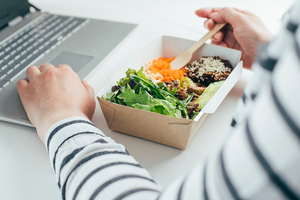
Employees are unlikely to be wowed by generic sandwich platters or salad bars. If you don’t put thought into your contract catering menus, they’ll be dull and forgettable. Providing the same mediocre food options over and over feels more like doing the bare minimum than genuinely trying to cater to employees’ needs.
Instead of sticking with the same caterer every time, utilize a rotating selection of local restaurants. Working with real restaurants gives employees access to delicious chef-crafted menus and unique flavors. Switch up your options often, rotating through a diverse selection of cuisines to prevent menu fatigue.
Having to wait in long lines to order lunch will take away some of the appeal of having food in the workplace. Your contract caterer should be able to streamline this process for you. Providing them with the option to order ahead gives employees the chance to plan their meals in advance, and it also helps build anticipation.
But nobody will use a digital ordering platform if it’s difficult to navigate. Glitchy, unintuitive interfaces and long, tedious checkout processes can turn a feature that’s supposed to add convenience into an irritating obstacle. To ensure things run smoothly, work with a contract caterer that provides a high-quality, tech-enabled experience.
Organizing recurring catering can be difficult, especially when you’re trying to rotate through new options every day. Coordinating with multiple vendors, accounting for dietary restrictions, handling delivery logistics, and managing budgets can pull your administrative team’s focus away from other projects.
To alleviate the pressure, work with a contract caterer that handles everything for you. They should be able to manage day-to-day operations with minimal oversight from your team, creating a smooth experience every time.

With Fooda, you can bring great food into your tech office without creating extra work for your team. Here’s how it works.
Fooda’s network of 4,500+ restaurant partners makes it easy to switch up the menu. Because we have established relationships with vendors, we can consistently bring new options into your office without the need for extensive coordination or oversight on your part. This variety also makes it easy to accommodate dietary restrictions. With so many vendors to choose from, you can make sure that everyone always has something to eat.
In addition, 80% of our restaurant partners are independently owned, meaning they’re run on local flavors that are bound to appeal to employees’ tastes. They get access to the food they enjoy in their personal lives right in the office, keeping them engaged long-term.
Fooda’s proprietary technology simplifies the ordering and checkout process for your employees. They can order ahead of time through our app, which allows them to see menu options up to a week in advance. This makes it easy for them to plan their week and gets them excited about what’s to come.
Fooda also offers a point-of-sale system that takes frustration out of the checkout process. On the app, all subsidies are applied automatically, and card information is securely saved, allowing them to order with the press of a button. For in-person checkout, they can simply scan a QR code to apply their subsidies and proceed with payment.
Each of Fooda’s clients gets a dedicated account manager that works with them to handle implementation and ongoing operations. Delivery, menu curation, and vendor management are all handled for you, so you don’t have to worry about the logistics.
But this doesn’t mean you’re completely in the dark. You can access our online portal at any time to track budgets, and you get ongoing access to participation data and community impact reports, allowing you to see the difference your program is making in real-time.
Fooda offers a variety of products that fit your contract catering needs. If you’re working with a hybrid office with fluctuating attendance, you can scale operations or even offer different services on different days to meet demand. Our programs are also designed to grow with you, so you don’t have to start over from scratch every time priorities shift.
Here’s a quick overview of what Fooda has to offer:
Ready to simplify contract catering with Fooda? Contact one of our sales representatives to get started.
What is contract catering?
Contract catering is an ongoing arrangement where a provider delivers recurring meal service to a workplace. It typically involves a set schedule, negotiated pricing, and a standing relationship rather than per-event booking.
How much does contract catering cost per employee?
Costs vary by provider, meal frequency, and headcount, but most contract catering programs are priced per person per meal or as a monthly subscription. Companies should ask providers for a breakdown of per-meal pricing, minimum order requirements, and any setup or service fees. Pricing should always be transparent and should never come with any hidden fees.
Can contract catering accommodate dietary restrictions and allergies at scale?
Yes. Providers that work with a rotating network of restaurants, rather than a single kitchen, are generally better equipped to offer vegan, vegetarian, halal, kosher, and allergen-aware options across a large or diverse workforce.
How does contract catering work for offices with hybrid schedules?
Most contract catering providers let companies adjust order volume day-to-day, so employers aren't paying for meals when few employees are on-site. This flexibility is one reason contract catering tends to suit hybrid offices better than a fixed cafeteria model.
Do contract caterers work with local, independent restaurants?
Some do and some don't. Providers that partner directly with local restaurants can offer more variety and support small businesses, while others rely on a single central kitchen or a small set of preferred vendors.