With employee turnover costing anywhere from 50-200% of an employee’s salary, many companies are looking for ways to improve their employee retention rates. In Denver’s highly competitive talent market, employees are considering more than salary when choosing where to work.
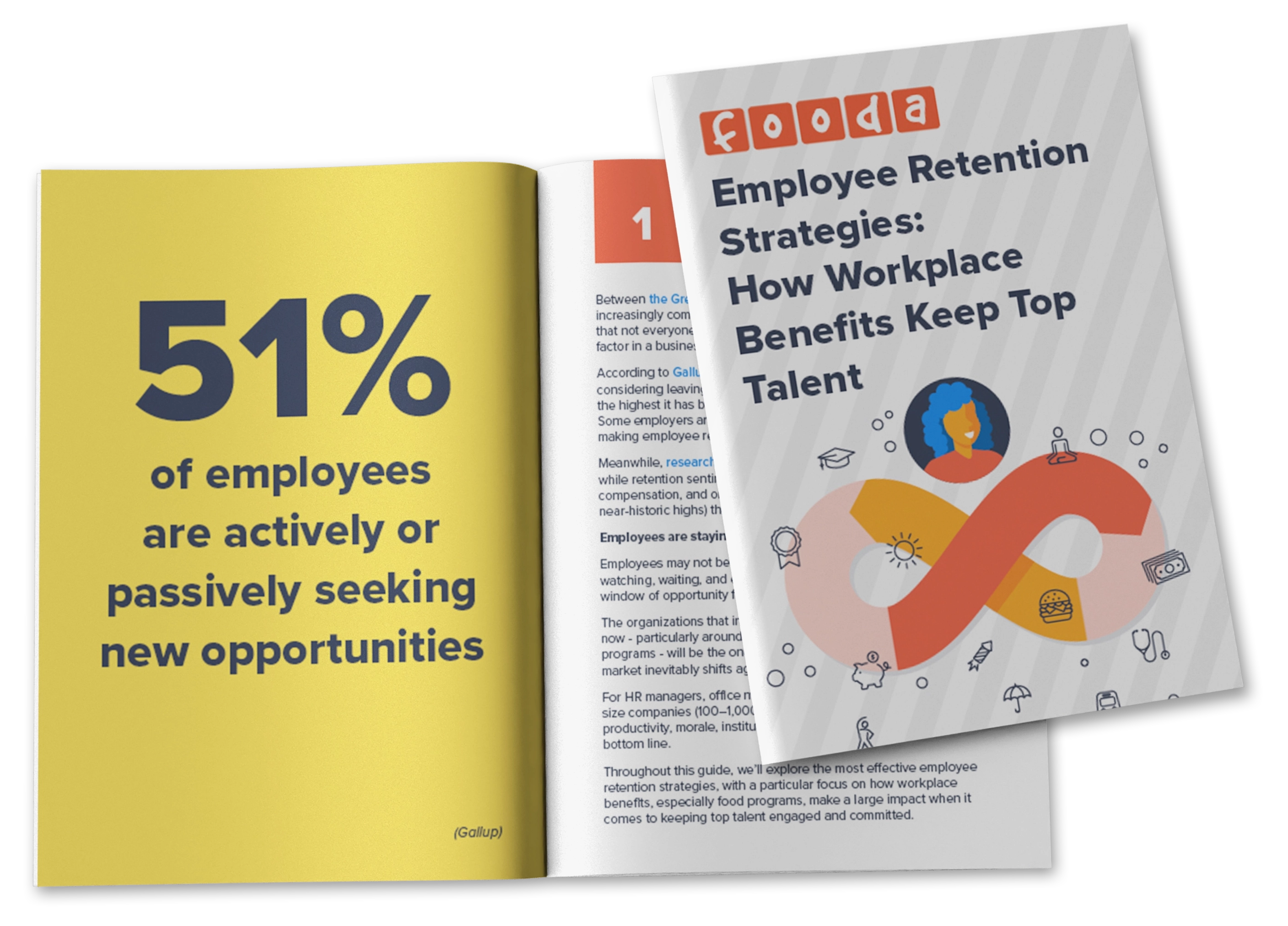
This makes it more important than ever to consider the employee experience you’re curating in your workplace. When employees are happy with their working conditions, they’ll be less likely to seek out new opportunities.
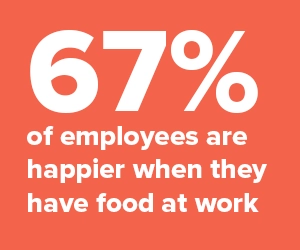
One of the easiest and most powerful ways to improve your employee retention rates is by offering food in the workplace.
Workplace food programs can improve employee retention in any city, but Denver has a few unique aspects that make them especially valuable. The city’s selection of diverse cuisines, the high percentage of hybrid workers, and limited walkability can make workplace food programs a particularly valuable perk.

Though it’s not what the city is most known for, Denver is home to a vibrant local food scene. With over 1,000 local restaurants to choose from, employees have nearly endless variety and quality at their fingertips. From traditional, authentic cultural dishes to bold, inventive fusion cuisine, Denver’s flavor profile is unlike anything you’ll find anywhere else.
Because of this, employees will truly appreciate having local flavors available in the workplace. The bar for office food is high, and by meeting it, you’ll send a clear message to your employees that you’re taking their preferences into account.
Providing quality food in-office allows you to leverage the city’s best resources, making the office feel more comfortable and welcoming. When their in-office experience reflects their lives outside of work, employees will be more excited to come into work, and more likely to keep coming back.
According to Robert Half, 20% of Denver’s new jobs in Q1 2026 were hybrid. That’s one of the highest rates in the nation. In addition, data from the Bureau of Labor Statistics shows that Colorado had the third highest percentage of hybrid workers in the country at the end of 2025 with 16%.
Gallup reports that approximately 60% of employees prefer hybrid work. That’s a significant majority, making hybrid work models one of the best ways to attract and retain talent.
But with so many hybrid opportunities available in Denver, competition for qualified workers remains fierce. If employees have their pick of employers that offer their preferred work model and additional perks and benefits, hybrid work alone may not be enough to keep them on board.
By offering convenient, reliable, and affordable access to delicious food at work, you can significantly improve the in-office days. It’s an experience employees can’t recreate at home. It gives them something to look forward to and makes coming into the office feel more rewarding.
Denver is generally considered to be less walkable than other cities of its size. Though it has pockets of highly pedestrian-friendly areas, public transportation options are limited outside of downtown, making major corporate hubs like the Denver Tech Center (DTC) largely car dependent.
This can complicate lunch time. Employees will often have to drive to nearby restaurants, navigate parking, wait in line, and rush back, which adds to the already inconvenient experience of leaving the office for lunch. This also results in employees sacrificing most of their break just to get a meal.
You can avoid this issue by providing food on-site. Lunch time can become a relaxing break rather than a stressful obligation. Employees will have time to decompress and return from their breaks refreshed and ready to work.
Workplace food programs are one of the most effective ways to support employee retention initiatives. Here’s how they can boost employee satisfaction, cultivate positive culture, and increase employee engagement:

Fooda’s 2026 Workplace Lunch Report found that 83% of workplace and people leaders believe food has a significant impact on company culture. Despite this, one in three companies don’t have a workplace food program. Fewer than half encourage their teams to eat together, and less than a quarter believe that lunch is more social than it was a year ago.
Recognizing and taking steps to address these factors can greatly improve your turnover rates. Providing a quality workplace food program that’s tailored to your team’s needs can become a powerful employee retention lever.
When employees are encouraged to eat together, they get the opportunity to bond outside of professional contexts. They form meaningful relationships that create a sense of belonging that can increase their morale and keep them engaged long-term.
These relationships also make collaboration more rewarding. They feel comfortable expressing new ideas and opinions, resulting in higher-quality, more fulfilling work.
The benefits of workplace food programs go beyond the food itself. The experience they create can have long-term effects on the employee experience that bring new talent in and reduce turnover.
Web MD’s Center for Research found that employees that believe their employers care about their wellbeing were 34% more likely to stay with their companies. It’s easy to say that you care, but it can come off as insincere if you don’t make any effort to show it.
One of the easiest ways to demonstrate care and appreciation is by providing food in the workplace. It shows that you’re considering your employees’ needs, both physical and mental. Easy access makes them less inclined to skip lunch, and regular breaks give them a safe space to decompress.
Putting visible, demonstrable effort into improving the employee experience sends the message that you value your team beyond their productivity. That care goes both ways. When employees feel appreciated, they’ll be more motivated to put in their best effort. It creates a reciprocal relationship, and their work gives them a sense of purpose rather than feeling like an obtrusive obligation.
It’s not uncommon for employees to view coming to work in-person as an inconvenience. Their commutes take up valuable time that can feel like a significant encroachment on their work-life harmony.
Commuting can also be expensive. While affordable public transportation is a viable option for those that live in the city, employees coming in from the suburbs often don’t have access to it. When they drive into the office every day, they have to pay for parking and gas, which can add up quickly.
The cost of ordering lunch daily, or the time it takes to pack lunch, in addition to time and cost of commuting to the office, can make in-office not feel worth it. Employees feel like they have no good options, resulting in the work day feeling more draining, which can quickly increase your employee turnover rates.
One of the easiest ways to offset these costs is by providing food as a workplace perk. Employees will have ready access to lunch, reducing the strain on their personal resources. Workplace food programs create a consistent and immediately visible difference, making them a powerful retention driver.
Although workplace food programs have the potential to have a significant impact on employee retention rates, they have to be executed thoughtfully in order to be effective. Otherwise, they can come off as disingenuous and decrease employee satisfaction, working against you rather than for you. Here are five things to look for when choosing a workplace food partner.
Denver is home to an incredibly rich, diverse food scene. Employees have grown accustomed to this variety, and your workplace food program needs to reflect that in order to keep them interested.
According to Fooda’s 2026 survey, 83% of leaders value variety in their food programs, and 25% say employees expect frequent change. Yet not all programs can deliver on this.
Traditional workplace food programs often rely on fixed menus with only a handful of rotating options. Menu fatigue will set in quickly, and participation will fall. If employees don’t use the program, you won’t see the benefits, and your employee retention rate will remain the same. By partnering with a food program provider that delivers variety through rotating restaurant selections, you can keep employees engaged.
Fooda’s 2026 survey also found that 87% of leaders feel that it’s important to support local restaurants. Less than 10% said that it wasn’t a priority. That’s a near universal consensus that makes leveraging local restaurants a necessity in your workplace food program.
Employees value authenticity in their meals. Restaurant-quality food exceeds employee experience expectations in a meaningful way that will keep employees coming back. They’ll have something to look forward to during their morning commutes, and they’ll head home at the end of the day happy and well-fed.
Amongst employers that offer food programs, giving employees easy access to delicious, local food will set you apart and give them a compelling reason to stay, even during the busy season.
There are a lot of things that could deter employees from participating in your workplace food program. Providing food in the workplace is great, but if it feels overpriced, employees are unlikely to use it.
If your food program is accompanied by inflated prices, employees will notice. They’re not likely to participate if they feel like they’re being ripped off.
Subsidies are a great way to encourage participation while giving you a competitive edge. Even partial subsidies greatly increase participation rates. The more people that participate, the bigger the impact your program will have.

Denver is considered to be one of the greenest cities in the US. That achievement isn’t just the result of the local government’s efforts, it’s reflective of the community’s nature-apprecitating, eco-conscious values.
These attitudes are reflected in the local food scene. Colorado’s agricultural infrastructure makes it easy for restaurants to source their ingredients from the state’s many local farms. This significantly shortens supply chains, decreasing carbon emissions.
Conversely, large legacy food providers often have rather long supply chains. Their operational models require ingredients to be shipped all over the country from just a few locations, often with multiple stops in between.
By choosing to work with local restaurant partners instead, you can align your company’s values with those of your employees. They can feel good about working with your organization, making them more dedicated to their work and more likely to stay, even if other offers come along.
Denver’s outdoor lifestyle has also curated a health-conscious culture. The city is home to many restaurants with vegan, vegetarian, gluten-free, and allergy-conscious menus.
That’s why it’s important to take these preferences into account. If you don’t consider diverse dietary needs, someone will inevitably be left out. This kind of exclusion is likely to drive employees away rather than retain them.
Other employees are likely to notice these exclusions, too. If it becomes clear that you’re not considering everyone’s needs, your food program can become a point of contention rather than a genuine perk. Meanwhile, finding a program that supports dietary diversity can be a sign of good faith, further supporting employee engagement and retention initiatives.
Our unique operational model and selection of highly customizable programs make Fooda the perfect workplace food program partner for any company. Our network of 4,500+ restaurant partners makes it easy to bring rotating local menus into the workplace without adding administrative burden.
Employees get exciting menus full of variety and authentic, environmentally-friendly local food, along with convenience that makes their lunch breaks refreshing and rewarding.
Employers get a powerful talent retention and attraction lever that’s easy to operate with a predictable budget. Everyone benefits.
Fooda offers a number of programs that are fully managed, locally powered, and scalable to meet fluctuating demand.
Ready to bring Fooda into your workplace? Contact one of our sales representatives to get started.
How much does a workplace food program cost for Denver companies?
Total costs depend on the size of your team, the type of program, and whether you choose to subsidize meals. Fooda’s programs are designed to scale with your headcounts, creating predictable budgets and reducing financial waste
Can workplace food programs work for small Denver businesses?
Yes, there are multiple program models that work well with smaller companies. Fooda’s Office Delivery is particularly suited to smaller teams, as you never order more than you need, allowing for lower minimum headcounts.
What types of cuisine are available through Fooda's Denver restaurant network?
Fooda works with a wide selection of local restaurant partners in Denver, and our network reflects the city’s diverse food scene. We have everything from Mexican to American to Asian to Mediterranean food, so employees are never short on options.
What’s the best way to get employees to use a workplace food program?
Participation tends to be highest when programs offer variety, convenience, and affordability. Rotating menus prevent fatigue, on-site or delivered options remove friction, and even partial subsidies significantly increase uptake. Encouraging team lunch times rather than eating at desks also helps the program build the cultural momentum it’s designed to create.
How does a workplace food program compare to other employee retention strategies in terms of ROI?
Unlike one-time bonuses or compensation adjustments, a food program delivers a daily, visible reminder that the company invests in employee experience. That consistency tends to reinforce loyalty over time in a way that infrequent rewards don’t. When factoring in the cost of turnover, a well-utilized food program represents a relatively low-cost, high-visibility retention lever.