Between the menu fatigue and low-quality ingredients, traditional corporate cafeterias often see notoriously low participation rates. In fact, 70% of employees prefer to get lunch delivered from local restaurants instead of their workplace cafeteria food.
Add that to the high operating costs, and it doesn’t make sense for many companies to keep their office cafeterias open. Instead, they’re looking into corporate cafeteria alternatives that offer greater flexibility and better food quality to meet rising employee expectations.
If you’re considering replacing your corporate cafeteria management services, this post offers a comprehensive guide to help you make that switch. From deciding when it’s time to switch to navigating the cafeteria vendor transition, find out everything you need to know about changing food service providers.
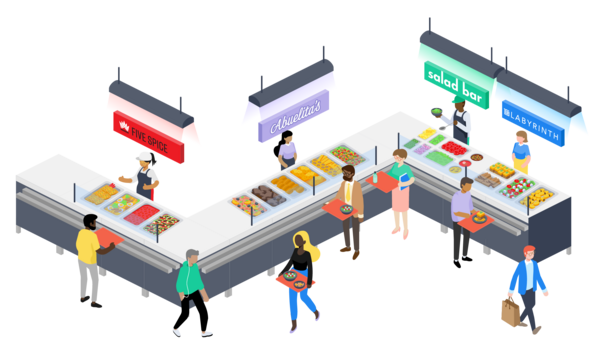
Because of strict, long-term contracts, traditional corporate cafeteria management companies don’t always have the flexibility to adapt to the demands of the modern workplace.
Here are four key signs that signal it’s probably time to consider switching corporate food service vendors.
Perhaps you’re going through a transition where your headcount has significantly dropped over the last few months. Perhaps you’re switching to a hybrid model that sees fewer people working onsite. Or perhaps employees just don’t like the cafeteria food and can’t justify the price.
Regardless of the exact reason, a steady decline in participation is one of the major signs it’s time to reconsider your corporate dining services.
If the food is considered low-quality by employees, it’s hard to justify keeping your current service. Repetitive menus that bore your employees, limited selections that don’t meet dietary restrictions, or meals that fall short on taste are all signs that it’s time to switch to a different food service provider.
Whether you’re realigning your budget or your vendor is hiking up prices, there comes a time when it no longer makes financial sense to keep working with your current provider. Cost-related factors are one of the major reasons why companies decide to switch cafeteria vendors.
Sometimes, it isn’t just one major problem but multiple minor issues that force companies to make a switch. It’s time to consider changing food service providers if they repeatedly raise several red flags like:
Switching to a different food service provider involves making a long-term commitment that affects your entire organization. So you need to strategically plan for your needs and select a new vendor accordingly.
Here’s a five step guide on how to switch cafeteria vendors.
Replacing your cafeteria vendor will sometimes involve breaking an existing contract. Start by looking into your agreement to understand the cafeteria management contract contract termination and notice period clauses
Most contracts require a 30- to 60-day written notice period to terminate without cause. But breaches like health code violations and safety failures could be cause for immediate termination. Or you could also pay a penalty equal to the remaining notice period value and exit the agreement.
What does your daily participation rate look like right now? How much are you spending per employee per day? Looking at your current performance metrics will give you a clearer idea of where you stand and what needs improving.
The result? You can set expectations and better understand what you need in a new provider.

Now it’s time to plan your updated needs as you start your search for a new food service provider. Make sure to conduct a survey to find out what your employees like or dislike about the current program. Perhaps they like the food quality but not the repetitive menu. Or maybe they find the long wait times and slow service inconvenient.
Having a clear idea of your staff’s needs and preferences will give you a shortlist of what to look for in a new cafeteria vendor.
This is the stage where you decide on:
Once you’ve outlined your needs, you’re all set to prepare your corporate cafeteria RFP (request for proposal). Send your RFP to various companies offering corporate cafeteria management services and outline details like:
Download our free corporate cafeteria RFP template here:
As bids come in, you can review your options based on predetermined selection criteria. List all the evaluation criteria and the weight each criterion holds, so you can compare bids fairly. The criteria can include:
Make sure to conduct taste tests to check the food quality instead of relying on reviews alone. Checking for hygiene and safety standards is also a necessary step to vet potential food service providers.
Changing food service providers means completely overhauling existing systems. New menus, fresh cafeteria setups, and unfamiliar tech can be overwhelming to navigate for employees. That’s why you need to strategically manage your cafeteria vendor transition with minimal downtime.
Here’s how you can establish a structured rollout plan to ensure a smooth transition:
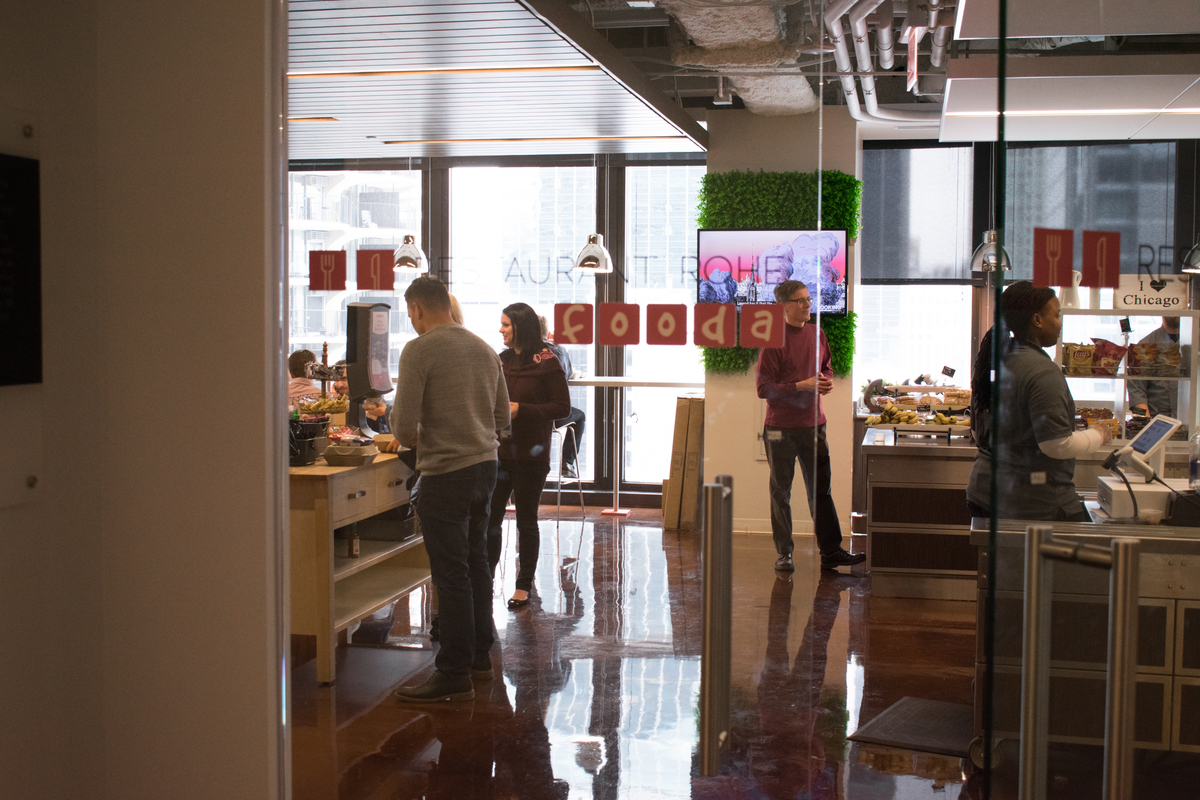
Orange by Fooda is the modern cafeteria alternative that lets you serve freshly cooked meals and bring the restaurant experience right into your office.
With flexible agreement terms and scalable models, it’s easier than ever to add on to your existing cafeteria or switch your corporate cafeteria management services without the heavy operating costs.
According to Fooda’s 2026 Workplace Lunch Report, 80% of leaders say variety is important for their workplace food program.
So bringing in variety is one of the best ways to instantly drive more cafeteria participation. Orange by Fooda is powered by a local restaurant network serving fresh and authentic meals daily. Variety is automatically baked into the program and you get to bring in a rotating selection of restaurants.
For example, a resident sandwich shop can provide an anchor for those who need consistency. Meanwhile, you can rotate between cuisines and restaurants for freshness and variety, frequently switching between Indian, Mexican, Italian, Japanese, Hawaiian, and so on.
With traditional cafeterias, rigid contracts often force organizations to pay for food their employees don’t even eat.
Costs can quickly build up, making it expensive to keep the cafeteria running. And for hybrid teams with fluctuating onsite attendance, it doesn’t always make sense to keep paying for unsold trays.
The Orange by Fooda model is scalable by design, with restaurants doing food prep based on actual employee orders. So food prep automatically matches daily attendance, eliminating food waste and unnecessary expenses.
This is both cost-effective and sustainable for organizations, allowing them to effortlessly scale even as demand fluctuates daily.
Many legacy cafeterias still rely on clunky systems, manual order entries, cash payments, and paper-based meal coupons. These systems are slow and prone to errors, creating unnecessary delays that add up to long lines at the cafeteria.
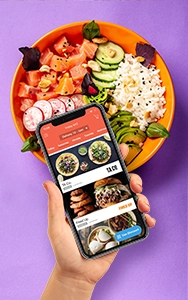
With Orange by Fooda, proprietary technology streamlines the ordering and payment process with online ordering and scan-to-pay features. Employees can browse menus with meal subsidies automatically applied and order their meals ahead of time.
Cafeterias that need daily supervision and management use up a huge portion of your administrative resources. Fooda addresses this with a dedicated cafeteria manager and team to oversee the entire cafeteria operations for you.
Our team coordinates with local restaurants on your behalf, managing schedules and offering insights on anticipated demand. This means you get to run an efficient cafeteria operation without the logistical headache.
Ready to switch corporate cafeteria management services? Talk to Fooda today.

Most cafeteria vendor transitions take 60 to 120 days from decision to first day of service. The notice period on your existing contract usually accounts for 30 to 60 days of that, with the RFP process, vendor selection, and onboarding running in parallel where possible. Programs that require kitchen buildouts or new POS integrations sit at the longer end of that range, while restaurant-powered models that use existing space can launch faster because there is less physical infrastructure to change.
Yes, though the exit path depends on your contract language. Most agreements allow termination without cause after a 30- to 60-day written notice, sometimes paired with a penalty equal to the remaining notice period value. Termination for cause is typically immediate and covers breaches like failed health inspections, safety violations, or repeated failure to meet service level agreements. Review the termination clause before you begin vendor conversations so you know your timeline and any financial exposure.
In most cases, cafeteria staff are employed by the vendor rather than by your company, so they transition off site when the contract ends. Some incoming vendors will interview and retain existing staff, particularly kitchen leads who know the space and the account. If staff retention matters to your organization, make it an explicit line item in your RFP and ask each bidder how they handle it. Models that bring in local restaurant teams operate differently, since the restaurants supply their own staff.
Not always. Traditional cafeteria management requires a fully equipped commercial kitchen with prep space, ventilation, and storage, which is why buildout costs can stall a vendor switch. Cafeteria alternatives that partner with local restaurants handle preparation off site and only need serving space, refrigeration, and a point-of-sale setup. Companies with underused or aging kitchen infrastructure often find this is the lower-cost path to better food quality.
Track four metrics against your pre-switch baseline: daily participation rate, cost per employee per day, employee satisfaction scores, and food waste volume. Participation is the clearest signal, since employees vote with their lunch break. Set your baseline during the audit stage before the switch, then run a formal review with the new vendor at 30 days and again at 90 days once the program has settled into a normal rhythm.