In recent years, hybrid work has become the norm, but this has presented challenges many companies are still learning to navigate. When employees have the option to work from anywhere, in-office days need to be earned. Employers need to create a rewarding on-site experience.
This is especially true in Denver, where the talent market is competitive and hybrid schedules alone aren’t enough to draw people in. Small perks like workplace food programs have a high-impact and set you apart.
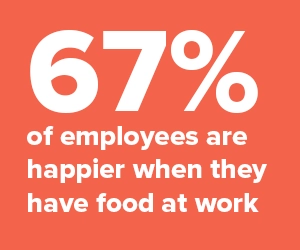
Workplace food programs are an effective way to drive attendance, culture, and employee engagement. They offer convenience, quality, and affordability that can turn in-office days from an obligation to a daily work experience they can look forward to.
Hybrid work schedules are relatively new, and many companies are still figuring out how to navigate them. Employees appreciate the flexibility they provide, but they can also present challenges for administrators.
Low attendance rates and a decreased emphasis on company culture can negatively impact productivity, engagement, and collaboration. Implementing a workplace food program is one of the best ways to address these issues.

When employees become comfortable with working from home, it can be difficult to convince them to come back and work in-person. Return to office mandates can often be ineffective or make coming into work feel like a requirement rather than a meaningful part of their workflows.
This is why many companies are transitioning away from mandates and finding other ways to incentivize attendance. According to Robin’s Return to Office Report, 44% of employees view office perks, including catered lunch, as a motivating factor in their choice to work on-site. When employees work in the office because they want to, they’re more satisfied and get more out of the experience.
Fooda’s 2026 Workplace Lunch Report found that 83% of workplace and people leaders believe food has an impact on company culture. Yet one in three companies don’t offer any kind of workplace food program.
That gap is significant, and it matters even more in hybrid offices where social opportunities are limited. There are fewer opportunities for coworkers to connect, making it important to encourage employees to take advantage of the time they do have.
Encouraging regular lunch breaks with a workplace food program gives employees the chance to connect and get to know each other outside of work. They feel a stronger sense of belonging, and collaboration runs more smoothly.
Implementing a workplace food program can have benefits in any hybrid office, but there are a few specific factors that Denver companies should consider when selecting a food service provider.
According to Gallup, 60% of employees prefer hybrid work. That strong majority preference gives companies that offer hybrid schedules a significant advantage in today’s competitive talent market, but in Denver, this alone may not be enough to attract job seekers.
Denver is home to one of the highest percentages of hybrid workers in the country. Robert Half reports that hybrid positions made up 20% of Denver’s new jobs from Q1 2026, a percentage on par with those of the largest cities in the US. According to the Bureau of Labor Statistics, 16% of Colorado’s employees were hybrid at the end of 2025, the third highest rate in the country.
Because employees have so many hybrid work opportunities available to them, Denver companies need to do more to draw in new talent. Competitive salaries and benefits are a great place to start, but one of the most eye-catching ways to set yourself apart is with perks that make in-office days more rewarding.
When done right, workplace food programs can offer convenience, affordability, and quality that employees can’t get at home. It relieves unnecessary stress and helps them save time and money when coming to work in person.

Denver’s food scene is full of variety and unique, bold flavors, from expertly seasoned Mexican cuisine to aromatic pho to inventive fusion dishes. Denver employees are accustomed to having diverse meal options right at their fingertips, and your workplace food program needs to meet these expectations.
If you partner with the wrong food service provider, employees will get static, generic menus that are slow to change with impersonal offerings. The appeal of having food available at work dies down quickly once menu fatigue sets in and they find themselves eating the same few meals over and over again.
The best way to counteract this is by working with a food company that prioritizes variety and local tastes. By leveraging local restaurants, employees get the flavors they’ve grown used to, and their work lives can better reflect their personal lives.
Rotating menus ensure longevity, keeping employee participation high over time. Employees always have something new to look forward to, and they get to choose what they want to eat rather than being stuck with the same few options.
Though much of Denver is walkable with reliable public transportation, a large portion of the city is heavily car-dependent. This means that many employees have a difficult time finding lunch during the workday, as they have to drive out of their way to get it.
Having to leave the office is already disruptive enough. It makes breaks feel rushed and stressful rather than restorative, and having to drive long distances or spend more on gas makes the issue worse.
In hybrid offices, it’s important to build structure into the day so that employees can get the most out of their in-person time. But without a thoughtful employee meal program, lunch breaks can quickly become a disorganized midday burden.
By bringing food into the office, you can remove decision fatigue from employees and allow them to stay engaged in their work rather than worrying about where they’re going to eat, increasing productivity as a result.

Denver’s corporate landscape is dominated by many diverse industries, including aerospace, telecommunications, energy, healthcare, and financial services. Each one has different schedules, workstyles, and needs.
One company may have employees that work long hours or staggered schedules. Others may follow the traditional 9-5 model. Some will have employees working on-site 4 days a week while others will only require 2. Many companies have multiple teams that all follow different schedules. This significantly complicates lunch orders.
That’s why your workplace food program needs to have flexibility built in. Scalable programs with accurate attendance tracking are the best way to adapt to the fluidity of hybrid work models. Ramping operations up or down based on attendance pattern analysis can reduce waste and better accommodate diverse schedules. They’ll meet your operational needs while ensuring nobody gets left out.
When it comes to feeding a hybrid workforce, there are plenty of viable approaches. All of these programs have their upsides, but they also depend on your headcount, budget, and preferences. . When executed thoughtfully, however, picking the right program can deliver a noticeable return on investment.
Popup Restaurants bring food from local restaurants into the office. They prepare food off-site and bring it in to serve to employees. These rotate based on employee preferences, allowing them to try new local food every day and bring back what they love most.
While traditional legacy cafeterias come with limited menu options and generic meals made from bulk ingredients, newer corporate cafeteria models can create a rewarding dining experience.
Modern models run on local restaurants, replicating the serviced cafeteria experience while offering variety and local flavors. Similar to Popups, rotating restaurants come in and set up to serve on-site while resident options like a deli or salad bar fill the gap. Combined with improved cafeteria POS systems, checkout processes can handle large crowds with ease.
With office lunch delivery, employees can order their own meals from a virtual food hall of local restaurants. Meals are delivered on-site, and everyone gets exactly what they want without requiring group consensus.
Depending on how you choose to approach it, either hired catering managers or office staff coordinate with local restaurants to bring in food for events. Corporate event catering can be used for casual, recurring staff meetings, one-time white-glove events, and everything in between.
Pantry services provide employees with 24/7 access to snacks and beverages. They are typically fully employer-paid, making them an easy way to meet employee needs. Offerings can be adjusted to suit employee preferences and maximize their effectiveness.
With meal stipends, employees are allotted a certain amount that they can spend on food wherever and whenever they choose. Employees are fully responsible for acquiring their own meals. Typically, employees spend their own money and are then reimbursed at a later time.
Subsidies are similar to stipends in that they are allocated amounts that employees can spend on food each day. Unlike stipends, however, they can only be applied to an employer’s meal program. Subsidies can be easily applied at checkout through point-of-sale systems.

Fooda’s unique approach can help you get the most out of your workplace food program. Our scalable, fully customizable, and streamlined programs create memorable dining experiences that make in-office days more rewarding without adding administrative strain.
Fooda’s programs are designed to adapt to varied schedules. All of them have scalability built in. Operations can be ramped up or down depending on attendance patterns. Fooda’s point-of-sale system gathers and analyzes participation data, allowing you to continually adjust operations to meet demand while minimizing waste.
When you partner with Fooda, you are assigned a designated account manager that assists in implementation and handles ongoing day-to-day operations. Administrative teams don’t have to coordinate with vendors, process payments, or gather orders. They get to enjoy the program instead of stressing over it.
Fooda’s purpose-built, AI-powered technology uses historical data to improve menu options, monitoring what restaurants, cuisines, and dishes employees order most. Over time, as it gathers more information, your workplace food program begins to better reflect your office’s unique tastes. It becomes more appealing to employees and becomes more effective as an attendance and retention driver.
Ready to partner with Fooda for your workplace food program? Contact a sales representative today to get started.
How much does a workplace food program cost for a Denver company?
Costs vary based on a number of factors. The amount you choose to subsidize will change your budget significantly, but it’s worth noting that higher subsidies typically see higher participation rates.
Beyond per-employee costs, the type of program you choose will also impact overall cost. Some programs, such as corporate cafeterias, require a fair amount of overhead, while Popup restaurants operate on a per-meal basis. Other programs, such as delivery, have consistent, flat rates.
Can a Denver company run more than one type of workplace food program at the same time?
Yes. Fooda allows you to mix and match services. You could choose to operate Popups on peak days and delivery on low-attendance days. Pantry services also work best as a supplement to other programs, filling in gaps during non-standard hours.
How do workplace food programs impact employee retention, not just attendance?
While attendance refers to the number of employees that choose to work in-office, employee retention refers to keeping employees from leaving your company to pursue different opportunities. Workplace food programs affect both by improving the employee experience and offering a competitive perk that keeps employees engaged long-term.