As workplace leaders gear up for budget shifts in the new year, food spend is one of the key aspects that will need reconsidering. Do you keep running the same corporate catering service? Or do you need to switch to something more flexible than traditional catering solutions, so you can cut down on expenses and food waste?
While your current workplace needs will be the biggest factor influencing your catering budget in 2027, it also pays to look at what’s going on in the market today. What trends are shaping corporate catering, and how will they influence your budget next year?
We’ve put together some of the major corporate catering trends that you should pay attention to in 2027.
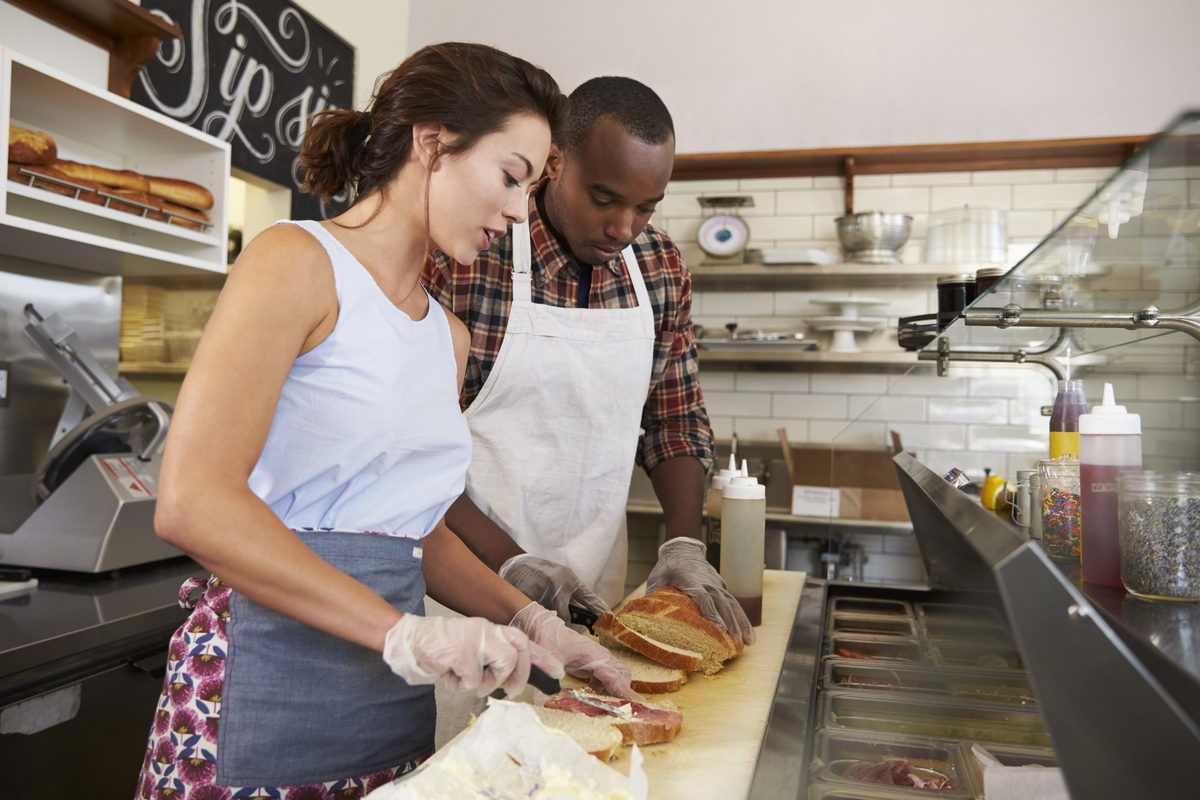
Shifting expectations are transforming partnerships with catering providers, as offices start to prioritize local restaurants and caterers over national corporate catering services.
As noted in Fooda’s 2026 Workplace Lunch Report, 90% of employees say it’s important for their workplace food program to support local restaurants. The fact that this automatically lets you give back to the local economy is just the most obvious factor.
Local restaurants are also much better equipped to meet your business needs for catering office lunch. They have a deep understanding of regional tastes and dietary habits, which allows them to serve up menus that satisfy your employees.
Local restaurants also tend to source their ingredients locally, creating a stronger, more resilient supply chain.
With minimum order requirements, traditional corporate catering services come with restrictions that no longer fit the needs of the modern workplace. And the limitations become more obvious as you try to arrange recurring office catering for hybrid teams.
No-shows, surprisingly high turnouts, and unexpected work-from-home days don’t exactly help when you need to plan menus and order meals days in advance. Instead, workplaces will see the value in adopting a blended model, where you combine different food solutions for a customized food and beverage program.
So for example, you could create a blended program consisting of:
Between hybrid schedules and a growing focus on flexible convenience, sprawling buffets no longer make sense for certain offices and events.
2027 will see more businesses embracing the micro-meeting format when catering lunch for the office. Boxed lunch catering with meals served in individual, grab-and-go boxes replaces wasteful and time-consuming buffet lines, allowing teams to eat while attending meetings or lunch-and-learn sessions.
Meanwhile, scaled-down minimalist spreads, shared platters, and build-your-own stations naturally encourage dialogue and collaboration for casual meetups and team-building sessions.
The biggest challenge of planning lunch for large groups is figuring out what everyone wants to eat. Preferences aside, there are allergies, healthcare needs, and religious restrictions to keep in mind.
Someone could be allergic to tree nuts, which means pesto’s out of the equation for a shared group meal. Or you might have employees needing halal or gluten-free options. All these unique needs add to the headache of planning catering for work, with office managers bearing the brunt.
2027 will see businesses adopting hyper-personalized solutions where employees get to choose their own meals instead of leaving it up to the office manager to keep track of dietary needs and preferences.
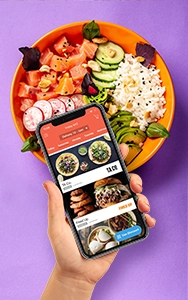
For instance, office catering delivery services give workers the freedom to browse a virtual food hall and order their own meals. This automatically helps you provide inclusive catering for business lunches where everyone gets exactly what they want.

Many organizations are realizing the positive return of investing in employee wellbeing. Gallup found that thriving employees are more engaged and less likely to miss workdays. They’re also 46% less likely to feel burned out and 65% less likely to look for a new job.
This realization will reshape how organizations design their food programs and plan their corporate catering menus in the coming year.
While dietary inclusivity was among the top workplace food trends in 2026, it will now extend beyond basic inclusivity to work catering that promotes employee wellbeing. This means a greater focus on menus that support physical and mental health. Balanced meals with fresher ingredients will become the standard for workplace events and recurring catered lunches.
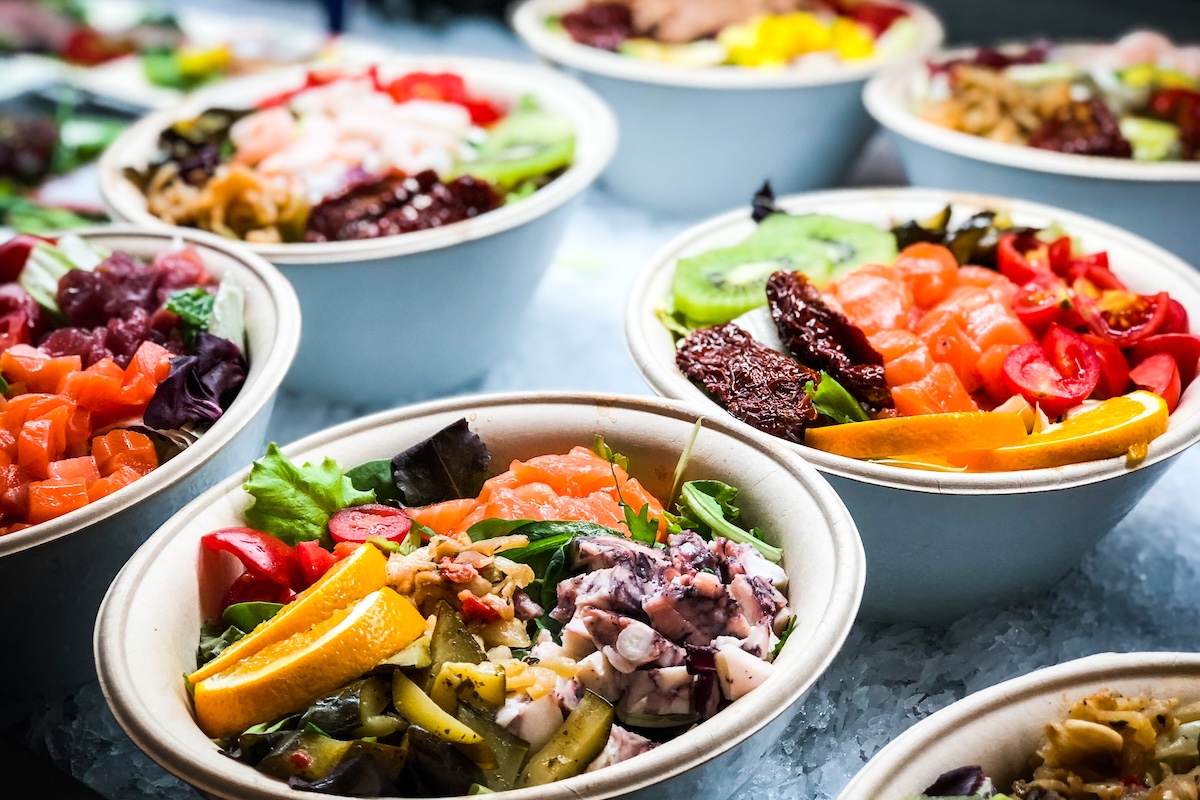
Beyond scheduled catering, wellness-driven menus will be embedded into the daily workplace experience. Organizations will start prioritizing 24/7 availability to ensure third-shift workers don’t get left out. Smart vending machines, grab-and-go stations, and micromarkets will offer all-day access to nutritious snacks, protein-packed meal bowls, and fresh fruit.
This provides a reliable backup, so your wellness initiatives don’t just stop at the occasional catered lunch that leaves out a huge portion of your workforce. It also means quick and convenient meals that workers can grab while on a time crunch or in between meetings.
Traditional catering models aren’t exactly a beacon of sustainability, and excessive food waste isn’t the only reason. Many traditional catering companies leave a high carbon footprint from sourcing ingredients. And with all the money spent on excess food, they could even be a major cash drain for your business.
As workplace leaders rethink their corporate food spend in 2027, this will become a major point of focus. Businesses will place a greater emphasis on sustainability, choosing catering models that support demand-based scalability. This is the easiest way to reduce food waste and cut down on unnecessary spend, which ultimately reflects in your bottom line.
Sustainability initiatives will also extend to service providers, with businesses prioritizing partnerships with environmentally responsible corporate catering services. Think: local restaurants that promote hyperlocal sourcing, seasonal menus, and sustainable food packaging.
With the growing adoption of digital tools, technology will streamline the process of planning and coordinating corporate catering for office managers and executive assistants.
It’s easier than ever to browse online catering menus and filter options based on budget, timing, cuisine, and dietary requirements. So instead of having to call multiple caterers to check if they include gluten-free and vegan options, you can simply select filters to find local restaurants serving menus that fit your team’s needs.
But this is just the bare minimum. Online tools can also provide clearer information on delivery schedules and portion recommendations. Backed by attendance and forecasting data, this will make it easier to coordinate office catering delivery that matches the unique needs of your event.
Meanwhile, app-based subsidy management allows you to quickly add or remove members and even customize stipend amounts at the team or individual level. This saves you the trouble of manual paperwork and going back and forth with different departments.
Working with Fooda gives your company access to a wide range of workplace food solutions. We let you build customized corporate catering programs that align with the latest trends and needs of your workplace.
Fooda takes corporate catering to the next level, with solutions that you can blend to meet your exact needs, whether it’s for recurring daily meals or a special event. Instead of being confined to a rigid catering contract, you get to mix solutions like office lunch catering and office lunch delivery to provide daily employee meals.
Meanwhile, you can choose from boxed lunch catering and corporate event catering services to cater a wide range of events, whether it’s a client meeting or a team-building session.
Additionally, scheduled Popup Restaurants featuring a rotating lineup of local restaurants add variety and provide backup on heavy turnout days. Rounding it all out with Fooda Pantry lets you set up micromarkets with healthy snacks and premium beverage solutions that are available 24/7.
Fooda’s model is powered by a network of local restaurants, with 100% of the programs supporting locally owned businesses. This means your catering orders directly give back to your local community, with 75% or more of every dollar you spend flowing back to the local restaurant owner.
This model also allows you to tap into local expertise, with catering menus that appeal to regional tastes and make the most of seasonal ingredients available locally.
Fooda’s proprietary tech streamlines how you plan and coordinate catering for office lunch and business events. You can effortlessly filter menus based on dietary preferences, catering schedules, and budget, and place orders online.
Some solutions also support employees browsing virtual menus and placing their own orders instead of having an office manager coordinating everyone’s meals. This simplifies the ordering process as it ensures better accuracy and inclusivity. It also scales based on actual attendance, making it the perfect catering solution for hybrid teams.
Fooda even keeps track of order and sales data, helping you inform your planning with accurate demand forecasting.
And if you’re subsidizing employee meals, you can manage subsidies right within the app. This means adding or removing members and setting subsidy amounts without all the back-and-forth between various departments. For employees, checking out their employer-paid catered meals is as simple as scanning a QR code in the Fooda app—minus the reimbursement headache.
Want to build a custom corporate catering program for your office? Talk to Fooda today.
What are the latest trends in corporate catering?
Corporate catering is shifting toward health, technology, and sustainability. Health-conscious menus, hyperlocal sourcing, eco-friendly packaging, demand-based scalability, and streamlined digital ordering are the latest trends.
What are the top corporate catering models today?
Micro-meeting formats like boxed lunch catering and family-style spreads, along with scheduled popups that support demand-based scaling, are among the top corporate catering models today.
What’s trending in corporate catering menus?
The current corporate catering landscape is influenced by menus that prioritize variety, wellness-driven meals, plant-forward nutrition, and interactive stations.